
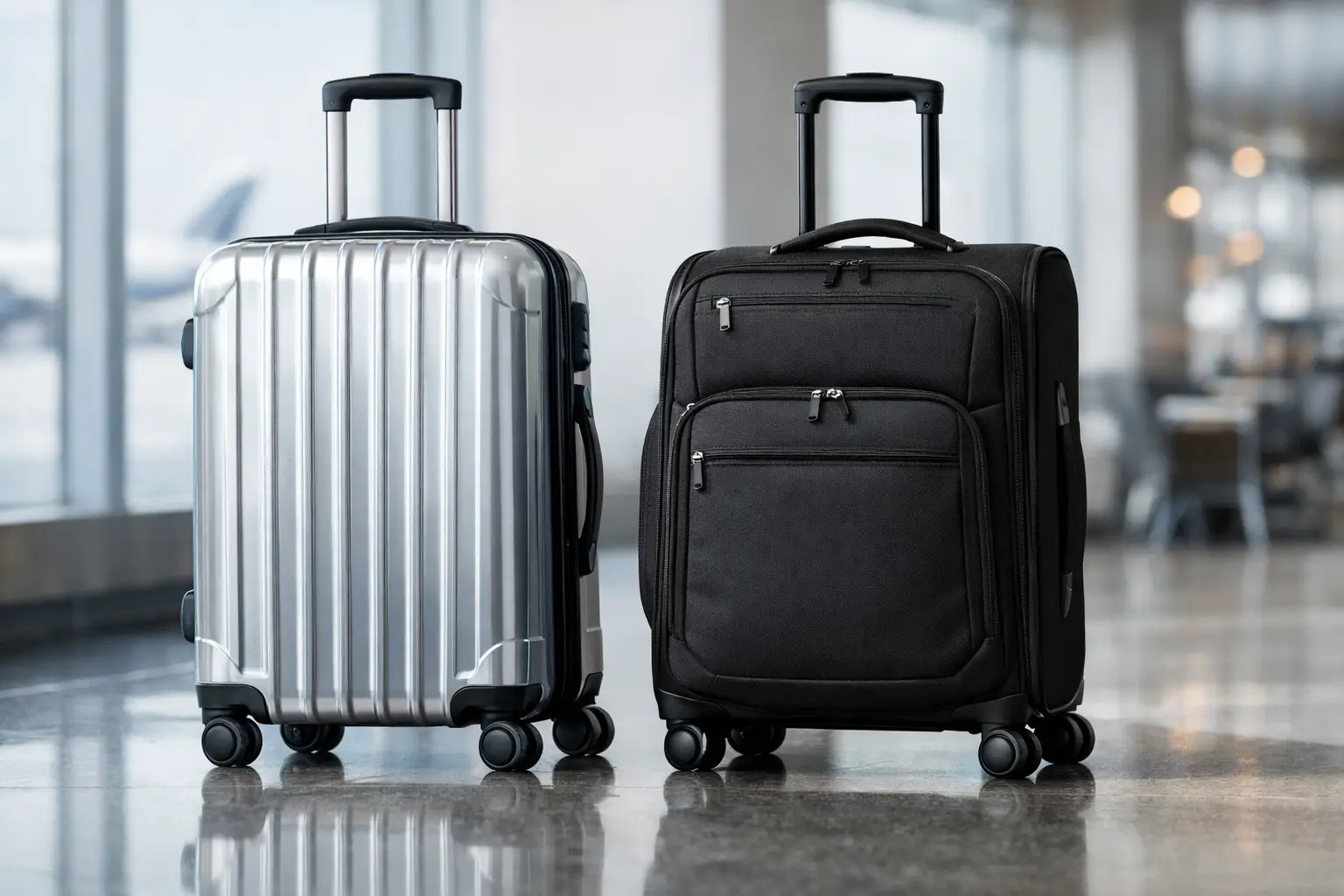
At baggage claim, the difference between a polished case that still looks pristine and a sagging bag with overstuffed pockets becomes very clear. The hard shell versus soft luggage decision is not just about looks. It shapes how you pack, how your belongings travel, and how effortless your trip feels from check-in to hotel arrival.
For a style-conscious traveler, luggage is part of the experience. It sits beside your airport outfit, rolls through hotel lobbies, and ends up in photos more often than you might expect. But the right choice is also practical. Some travelers need sleek protection for beauty tools, structured outfits, or fragile accessories. Others want flexibility, exterior pockets, and a bag that gives a little when the return trip includes extra shopping.
The biggest distinction is structure. Hard shell luggage has a molded exterior, usually made from materials such as polycarbonate, ABS, or aluminum blends. It keeps its shape, offers a clean and premium look, and tends to protect contents more effectively against impact.
Soft luggage uses woven fabrics, often nylon or polyester, over a flexible frame. It feels lighter in the hand on some models, expands more easily, and usually includes exterior compartments that make travel feel more organized and accessible.
That sounds simple, but the day-to-day difference is more specific. Hard shell luggage is often favored by travelers who value a refined, modern silhouette and want a suitcase that feels structured and elevated. Soft luggage appeals to those who prioritize convenience, easier squeezing into trunks or closets, and the ability to reach essentials without opening the full case.
There is a reason hard shell suitcases dominate luxury-inspired travel imagery. They look polished. The clean lines, glossy or matte finish, and sculpted form create a curated effect that feels intentional rather than purely utilitarian.
Beyond appearance, hard shell luggage is an excellent choice when protection matters. If you travel with skincare in glass bottles, a hair tool, dress shoes, or carefully packed occasionwear, a rigid shell offers reassuring support. It does a better job resisting crushing pressure in overhead bins or under a pile of checked bags.
Hard shell cases also tend to be easier to wipe clean. After a rainy curbside drop-off or a dusty trunk ride, the exterior can usually be refreshed quickly. For travelers who appreciate elegant presentation and low-fuss maintenance, that matters.
Of course, there are trade-offs. Hard shell luggage can scuff, especially in lighter colors or high-shine finishes. It is protective, but not invincible. A beautiful shell may pick up marks from rough baggage handling, and while many travelers see that as part of the journey, others may find it frustrating. Hard shell bags are also less forgiving when you try to cram in one more sweater or an extra pair of heels.
Soft luggage has stayed relevant for good reason. It is adaptable in ways hard shell often is not. If you are the kind of traveler who packs in layers, shops during the trip, or likes an outside pocket for documents and chargers, soft luggage can feel much easier to live with.
That flexibility is especially useful on road trips, quick weekend getaways, and family travel. A soft bag can fit into tighter spaces in a car trunk or guest room closet. It can also expand enough to accommodate those just-in-case extras that always seem necessary before departure.
Many travelers also appreciate the practical layout. Front zip compartments are ideal for items you want close at hand, whether that is a cardigan for a chilly flight, travel-size beauty products, or your itinerary. In a hard shell suitcase, you usually need to open the case fully to access what is inside.
The compromise is protection. Soft luggage does not shield fragile contents as well, and fabric exteriors are more vulnerable to wear, moisture, and stains over time. Premium soft bags can still look sophisticated, especially in tailored neutrals, but they rarely offer the same sleek visual impact as a beautifully designed hard shell case.
If your trips usually involve flights, polished outfits, and a desire to keep everything looking composed, hard shell luggage often makes the stronger impression and the smarter investment. It suits travelers who pack with intention and prefer a suitcase that feels like part of a curated lifestyle.
If your travel style is more flexible, soft luggage may serve you better. It works well for travelers who like easy-access pockets, need a little expansion room, or pack in a more relaxed, practical way.
There is also a middle ground. Many seasoned travelers own both and use them for different occasions. A hard shell carry-on for flights and city breaks, for example, paired with a soft duffel or larger checked bag for longer, more flexible travel, creates a wardrobe of luggage rather than a one-size-fits-all solution.
For carry-ons, the decision often comes down to organization versus structure. Hard shell carry-ons feel crisp, modern, and protective. They are a strong fit for short business trips, elevated weekend escapes, and anyone who wants a suitcase that keeps garments and accessories neatly contained.
Soft carry-ons are often more forgiving when overhead bin space is tight. If the bag needs to shift slightly to fit, fabric has an advantage. Exterior pockets can also be very convenient in transit, especially if you want your tablet, charger, or travel wallet within easy reach.
If you are a disciplined packer, hard shell is usually the more polished option. If you like flexibility and grab-and-go access, soft luggage may feel more natural.
For checked bags, protection becomes more important. Airport handling is not gentle, and a structured case can offer more confidence when your bag is out of sight. Hard shell luggage is particularly appealing for longer trips, destination weddings, or vacations where you are packing statement pieces, shoes, or beauty essentials you would rather not risk.
Soft checked luggage can still be a smart pick if you need more give or if weight is a concern on certain models. Just be realistic about what you are packing. If the contents are delicate or highly styled, a hard shell usually feels more secure.
The hard shell versus soft luggage question matters, but construction matters too. A well-made suitcase in either category will outperform a poorly designed one. Smooth spinner wheels, a comfortable telescoping handle, quality zippers, and a thoughtfully organized interior can change the travel experience more than shoppers expect.
Pay attention to weight, especially if you fly often. Look for interiors with zip dividers or compression straps that help maintain order. Color also deserves a little strategy. Cream, taupe, black, and deep green can all look luxurious, but if you want your suitcase to hide scuffs or stand out at baggage claim, that will shape the best choice for you.
A premium finish should still feel practical. Beautiful luggage is worth it when it supports the way you actually move through airports, hotels, and weekends away.
Choose hard shell luggage if you want elevated style, stronger protection, easy-clean surfaces, and a suitcase that looks as refined as the rest of your travel aesthetic. It is ideal for travelers who value structure and a more luxurious presentation.
Choose soft luggage if you want flexibility, expansion, exterior storage, and a bag that adapts to fuller packing habits or mixed-mode travel. It is often the more relaxed, convenience-first option.
For many shoppers, the answer is not about which category is universally better. It is about which one supports your routines, your wardrobe, and your idea of effortless travel. At Ceremoniale, that balance between beauty and function is always the point. The best luggage should not just carry your belongings. It should carry your standards with it, every step of the trip.
The smartest pick is the one that makes packing feel less chaotic and arriving feel more composed.








Leave a comment