
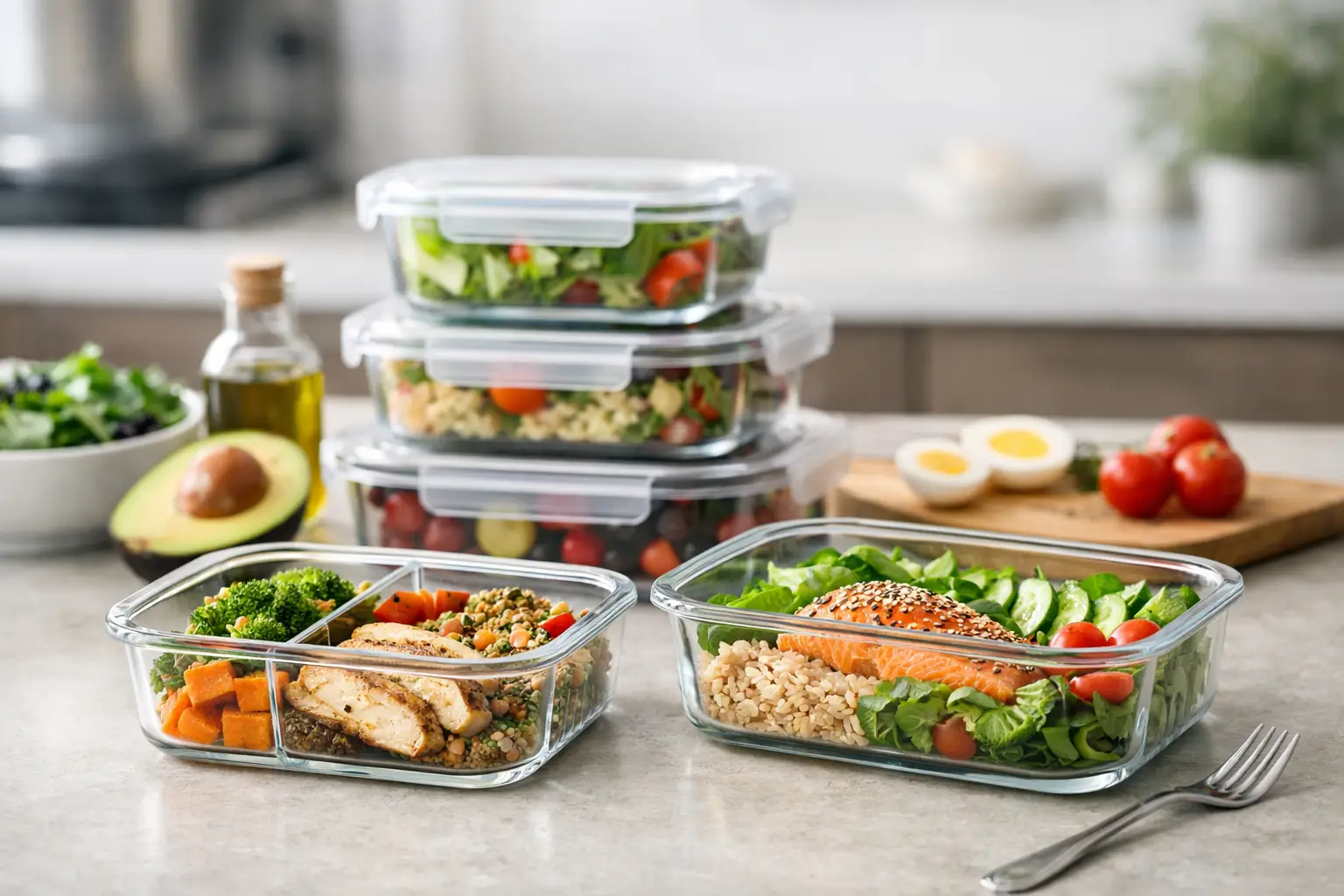
The Sunday reset looks far more inviting when Monday’s lunch is not hidden in a stained plastic tub. Meal prep containers glass options bring a clean, polished finish to the refrigerator while making everyday cooking feel more intentional. They are practical pieces, certainly, but they also turn a shelf of prepared grains, bright salads, and family dinners into a quietly luxurious kitchen ritual.
For households that value both convenience and a considered home, glass is often the upgrade that earns its space. The right set can move from oven to table to fridge with far less visual clutter, helping meals stay organized without compromising the look of a well-kept kitchen.
Plastic has its place, especially for lightweight snacks or a lunch bag that takes a beating. Yet glass offers advantages that are hard to ignore when you prep regularly. It does not readily hold onto the color of tomato sauce, the scent of garlic, or last week’s curry. After a thorough wash, a quality glass container looks fresh again rather than gradually taking on the history of every meal it has held.
Glass also makes leftovers easier to see. That sounds small until a refrigerator full of opaque containers becomes a guessing game. Clear sides encourage you to use what you have prepared, which can reduce forgotten food and make a busy week feel much more manageable.
There is an aesthetic reason, too. A coordinated collection of glass containers creates a calm, curated look in open shelving, a refrigerator, or a work-from-home lunch setup. For those who enjoy beautiful home details, meal prep becomes part of the kitchen’s design rather than a chore to conceal.
Not every glass container suits every routine. The best choice depends on whether you are cooking for one, packing lunches for children, freezing family portions, or setting out a ready-to-heat dinner after a long day. Before choosing a set, consider the balance of shape, capacity, lid quality, and heat tolerance.
A large set can be tempting, but a thoughtful mix is more useful than an overflowing cabinet. Small containers are ideal for dressings, berries, chopped toppings, and snack portions. Medium containers tend to become weekday essentials for breakfast, salads, grains, and individual lunches. Larger rectangular or square pieces are the workhorses for roasted vegetables, pasta bakes, and prepared proteins.
If your goal is to portion complete meals, medium containers in the 24- to 36-ounce range are often the most versatile. If you cook in larger batches and serve from the same dish, choose a few generous pieces alongside smaller storage options. Square and rectangular containers usually use refrigerator space more efficiently than round ones, while round bowls can be especially convenient for soups and saucy dishes.
The container may be glass, but the lid determines how confidently you can pack it. Look for a secure fit with a silicone seal if you regularly transport soups, yogurt, dressings, or marinades. Snap-lock lids offer extra reassurance for commuters and packed school bags, though they have more moving pieces to wash. Simple press-on lids are sleek and easy to use, but are better suited to upright storage than a loose tote bag.
A truly leak-resistant lid matters more than a label claiming it is airtight. Read the product details carefully, and remember that no container is invincible when tossed sideways with hot food inside. Let meals cool slightly before sealing. This helps prevent condensation, protects the seal, and keeps crisp ingredients from turning soft overnight.
Many premium glass containers are made from tempered glass or borosilicate glass. Both are designed for everyday durability, but they are not interchangeable with every heat source. Tempered glass is common, sturdy, and often safe for the oven up to a stated temperature. Borosilicate glass is valued for its resistance to thermal shock, which can be useful when temperatures change quickly.
The practical rule is simple: follow the manufacturer’s instructions and avoid dramatic temperature shifts. Do not take a freezing-cold container directly into a blazing oven, and do not set a hot dish on a wet or icy countertop. Even quality glass can crack under stress. Lids should usually be removed before oven use unless the product specifically says otherwise.
The best meal prep is not a refrigerator filled with seven identical meals you are tired of by Wednesday. A more refined approach is to prepare flexible components that can be combined in different ways. Think roasted vegetables, a cooked grain, two proteins, a bright sauce, and washed greens stored separately until serving.
Glass containers are particularly helpful here because each ingredient is visible at a glance. On Monday, build a grain bowl. On Tuesday, add the same roasted vegetables to a wrap. By Thursday, turn remaining chicken or tofu into a quick salad. The ingredients feel varied, while the prep work stays efficient.
For a household, assign zones instead of trying to make every container match every purpose. Keep grab-and-go breakfast items together, place dinner components on one shelf, and reserve a small section for lunch-ready portions. This kind of visual order is easy to maintain when the containers stack neatly and their contents remain visible.
If you want the refrigerator to feel especially polished, choose one lid color or a coordinated set rather than collecting mismatched pieces over time. It is a modest design choice with an outsized effect, much like matching hangers in a wardrobe. Everyday utility can still feel beautifully considered.
Glass performs beautifully with most prepared foods: cooked vegetables, grains, pasta, sliced fruit, salads, soups, proteins, sauces, and leftover dinners. It is also an excellent choice for acidic foods such as vinaigrettes, citrus-based dishes, and tomato sauces because it will not take on lingering color or odor as easily as some plastics.
There are a few situations where another material may be more practical. For a long commute, a rugged hike, or a young child’s backpack, lightweight plastic or stainless steel can be the safer option. Glass adds weight, and although it is durable, it can break if dropped on a hard surface. The most useful kitchen is not built around one material only. It is built around choosing the right piece for the moment.
Freezing also deserves a little care. Leave room at the top of soups, stews, and sauces because liquids expand as they freeze. Favor freezer-safe containers with straight sides or shapes designed for expansion, and cool food before placing it in the freezer. This protects both food quality and the container itself.
A refined collection stays that way with simple habits. Avoid stacking heavy cookware on top of glass containers, especially near the edges. When washing, inspect lids and silicone seals for trapped food, as this is where odors and residue tend to linger. A small soft brush can make a surprising difference.
Most glass is dishwasher-friendly, but hand-washing may extend the life of decorative lids, printed measurements, and silicone components. If a lid becomes warped, cracked, or no longer seals securely, replace it when possible rather than continuing to trust it with a packed lunch.
For stubborn residue, soak the container in warm, soapy water before scrubbing. Skip abrasive pads that can leave marks and make a once-pristine piece look tired. The appeal of glass is its clarity, so a little gentle care preserves the elevated finish that made it worth choosing.
Meal prep does not need to look clinical or feel restrictive. With beautiful glass containers, the simple act of planning ahead becomes an expression of a more composed home life: fresh food within reach, a refrigerator that feels orderly, and fewer rushed decisions when the week gets full.
Choose the shapes that fit your meals, invest in lids you trust, and let your collection grow around the way you genuinely live. A well-prepared lunch may be ordinary, but opening it from a clean, elegant container can make the moment feel distinctly more considered.








Leave a comment