
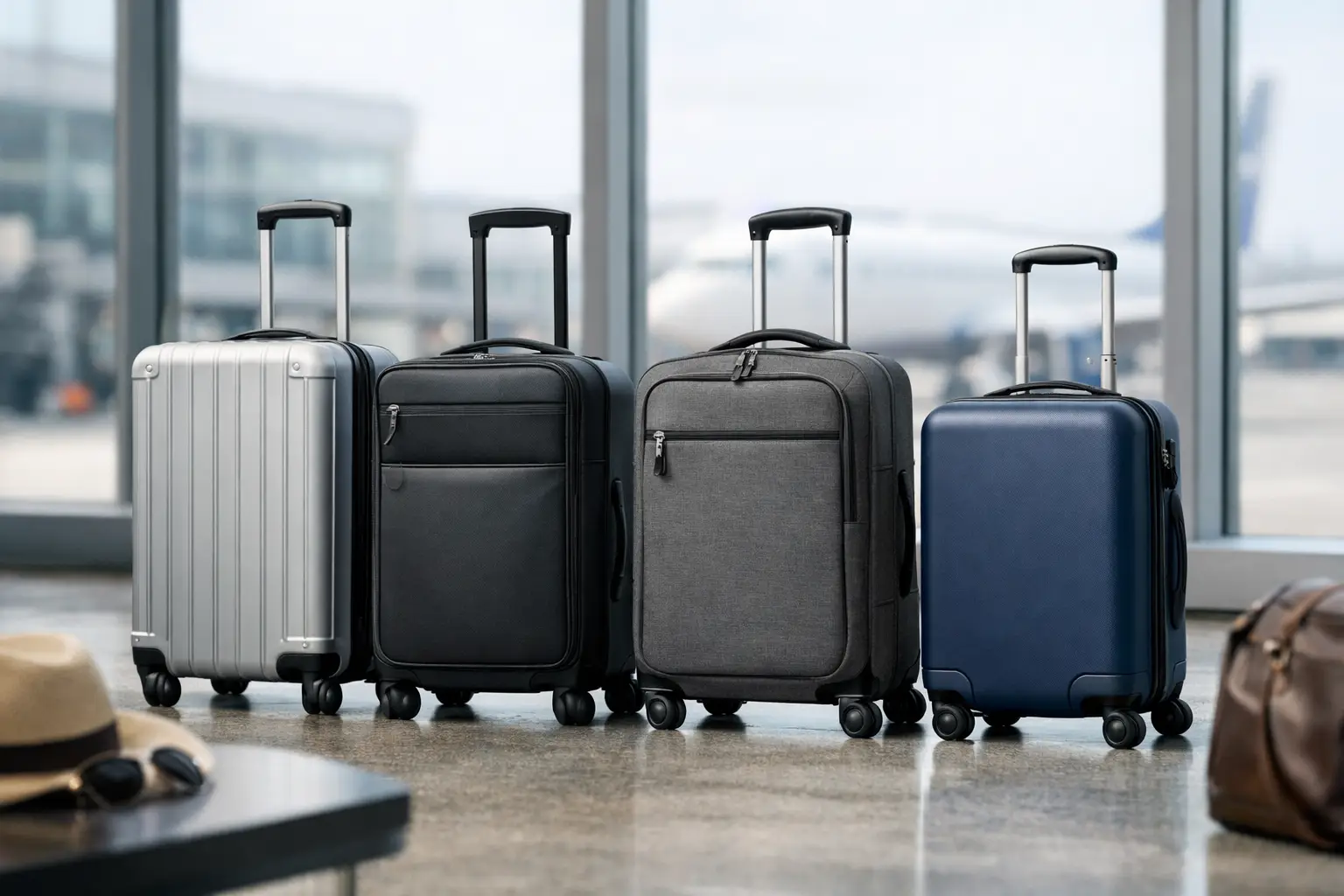
The difference between arriving composed and arriving flustered often comes down to one detail: whether your luggage works with the way you travel. A thoughtful carry on luggage comparison is less about finding the largest bag possible and more about choosing a refined travel companion that protects your essentials, moves beautifully through the terminal, and suits your personal style.
For a weekend wedding, a polished hard-shell case may be the obvious choice. For a quick business trip or a family visit with a few extra essentials, a soft-sided design can offer welcome flexibility. The right piece feels like part of your travel wardrobe – practical, elevated, and ready for the next reservation on your calendar.
Most major US airlines set carry-on limits near 22 x 14 x 9 inches, including wheels and handles. That familiar number is useful, but it is not universal. Budget carriers and regional aircraft may be more restrictive, while international rules can differ significantly. Before investing in a new piece, check the requirements for the airlines you fly most often.
A case that is technically within the limit can still become inconvenient if it is overstuffed or has bulky exterior details. For frequent flyers, a slightly more compact silhouette often offers greater confidence at the gate. You give up a little packing volume, but gain a calmer boarding experience and a better chance of keeping your luggage close.
Style matters here, too. Clean lines, a sophisticated neutral finish, and thoughtfully placed hardware make a travel essential feel more intentional. Black is timeless and easy to coordinate, while ivory, champagne, rich navy, and muted rose tones create a more distinctive, elevated look at baggage claim when you occasionally need to check your case.
The central choice in any carry on luggage comparison is usually structure. Hard-shell and soft-sided luggage each bring a different advantage, and neither is automatically better for every traveler.
Hard-shell carry-ons have a sleek, modern presence that suits a curated travel aesthetic. Their rigid exterior helps shield delicate items such as beauty tools, jewelry cases, sunglasses, and carefully packed shoes. Many are also easier to wipe clean after a rainy city transfer or a dusty overhead bin.
A clamshell interior typically divides packing into two equal sections. This is ideal for travelers who prefer packing cubes, garment folders, and a visually organized layout. One side can hold clothing, while the other secures shoes, toiletries, and accessories behind a zippered divider.
The trade-off is flexibility. A hard shell will not expand much when you add a last-minute knit, a gift, or an extra pair of heels. It also requires enough room to open both halves fully, which can be awkward in a compact hotel room. Look for a lightweight polycarbonate or quality ABS construction, reinforced corners, and a zipper that feels smooth rather than strained.
Soft-sided carry-ons are often the practical choice for travelers who like exterior pockets and a little extra give. A front compartment can keep a tablet, travel documents, charging cables, or a light layer within easy reach. That access is especially useful when you need to remove electronics at security or settle into your seat quickly.
Fabric luggage may offer an expandable section, making it appealing for return trips that include shopping or a fuller wardrobe. It can also be easier to fit into a tightly packed overhead bin. For frequent overnight trips, that flexibility can be more valuable than the crisp shape of a hard-shell case.
The compromise is that soft sides provide less protection from pressure and rough handling. Choose a dense, durable fabric with strong stitching and quality zippers, particularly if you carry structured handbags, cosmetics, or items that should not be compressed.
Spinner luggage with four rotating wheels is designed for effortless movement. It glides beside you through hotel lobbies, moves neatly down airplane aisles, and reduces the need to pull weight behind your shoulder. For travelers carrying a tote, coffee, or a child’s hand, that hands-free ease feels quietly luxurious.
Two-wheel rollers are less common in fashion-forward carry-ons, but they still deserve consideration. Their recessed wheels can be more durable over uneven sidewalks, cobblestones, and rough parking areas. Because the wheels sit within the case profile, they may also preserve a little more usable interior space.
For most airport-focused travel, premium spinner wheels are the more elegant and convenient option. Test for smooth, quiet movement and a stable feel when the bag is full. A beautiful case that wobbles through the terminal will not feel elevated for long.
A carry-on should make packing feel edited rather than chaotic. The best interiors include compression straps that actually hold clothing in place, zippered mesh sections for smaller pieces, and a lining that is easy to clean. A removable wet bag can be particularly useful for swimwear, skincare, or an unexpected spill.
Consider how you naturally pack before choosing a layout. If you travel with dresses, blazers, or carefully folded separates, a roomy main compartment and garment-friendly panel are worth prioritizing. If your trips are built around beauty, accessories, and multiple shoe options, divided storage and secure zip pockets may serve you better.
A built-in USB port can be convenient, but it should not outweigh the fundamentals. It adds value only if the charging system is easy to use and does not consume meaningful packing space. Similarly, integrated locks offer reassurance, though a durable zipper and a well-made frame are more important than any single feature.
A compact carry-on can be perfect for one- or two-night stays, especially when you pack a streamlined wardrobe in a cohesive color palette. A medium-capacity case gives more freedom for a long weekend, cooler-weather layers, or occasion dressing. The largest cabin-friendly models work beautifully for minimalist travelers on longer trips, but only if they remain within airline limits when full.
It depends on your habits. If you always travel with a personal item, use it strategically for a laptop, cosmetics, medications, and in-flight essentials. Then your carry-on can focus on clothing and shoes. If you prefer one bag only, a soft-sided design with smart pockets or a hard-shell case with exceptionally organized interiors may be the better investment.
There is also a case for choosing a smaller bag than you think you need. Packing less makes it easier to move, dress with intention, and avoid the frantic search for a gate-side bag check. A well-curated wardrobe of versatile pieces often travels better than a crowded case of options.
Details reveal quality quickly. An aluminum telescoping handle should extend and retract without sticking or rattling. It should feel comfortable in the hand at your natural walking height. Zippers should pull smoothly around corners, and interior seams should look neat and reinforced.
For hard-shell pieces, polycarbonate is prized for being lightweight with a degree of flex, while aluminum offers an exceptionally luxurious appearance and substantial protection at a higher weight and price. For soft-sided cases, durable nylon generally feels more premium than thin polyester and may stand up better to regular travel.
Finish is personal, but practicality belongs in the decision. High-gloss shells can make a striking statement, yet they may show scuffs more easily. Textured matte finishes tend to disguise everyday wear while maintaining a sophisticated appearance. A neutral case with a distinctive luggage tag or silk scarf tied to the handle is an elegant way to make it unmistakably yours.
The best carry-on is not necessarily the one with the most features or the boldest finish. It is the piece that rolls smoothly, fits your preferred airline, holds your essentials without a fight, and complements the way you like to arrive. Choose with both practicality and pleasure in mind, and every departure can feel a little more polished.







Leave a comment