
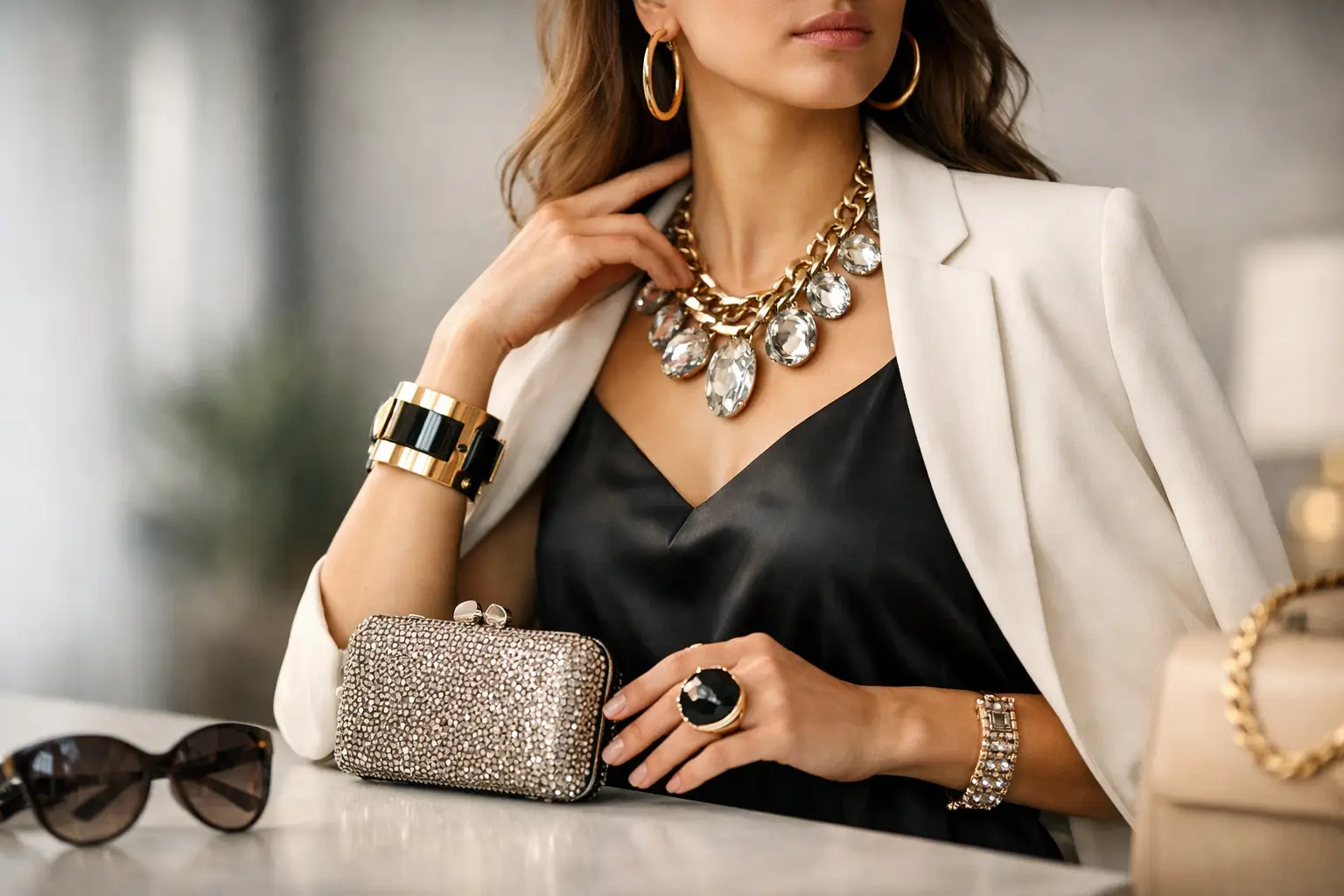
A sculptural cuff with a simple black dress. Crystal earrings against a crisp white shirt. A woven handbag that gives a neutral outfit real presence. That is how to style statement accessories at their best – not as extras, but as the detail that gives an entire look its point of view.
The mistake is usually not choosing a bold piece. It is trying to make every piece bold at once. Statement accessories are meant to lead. When they do, your outfit looks curated, polished, and expensive. When they compete with each other, the result can feel busy, even if every individual item is beautiful.
A statement accessory is any piece that naturally draws the eye first. It might be oversized earrings, a dramatic necklace, embellished heels, a structured handbag in a rich color, or a belt with sculptural hardware. Size matters, but so does contrast. Sometimes the most striking piece in an outfit is not the largest one. It is the one that creates the clearest visual tension.
That is why styling starts with hierarchy. Before you add anything else, decide what the focal point is. If your earrings are the feature, let the neckline and hair support them. If the handbag is the star, keep jewelry more restrained. If the shoes carry the statement, avoid layering on too many other attention-grabbing details.
This approach feels refined because it creates intention. A luxurious look rarely comes from wearing more. It usually comes from editing better.
The easiest way to style a bold accessory is to pair it with clean lines and quiet textures. A dramatic piece gains power when the outfit around it is streamlined. Think monochrome knits, tailored trousers, satin slip dresses, structured blazers, and denim with a polished finish. These foundations give the accessory room to stand out.
Color plays a major role here. If your statement piece is vivid – emerald, ruby, cobalt, metallic gold – grounding it with neutrals keeps the look elevated. Black, ivory, camel, taupe, chocolate, and navy almost always work. That does not mean bold-on-bold is off limits. It just requires more control. A bright bag with a printed dress can look stunning if one shade repeats and the silhouettes stay clean.
Scale matters as much as color. A large face-framing earring can overwhelm a high-neck ruffled blouse, while that same earring looks impeccable with a sleek strapless top. A wide belt needs enough visual space to make sense. Chunky bracelets work best when sleeves are cropped, rolled, or minimal. Good styling is often about making sure the accessory has physical and visual space to be seen.
If you are unsure where to begin, choose one hero accessory and let everything else support it. This is the most reliable answer to how to style statement accessories for real life, especially when you want a look that feels premium rather than costume-like.
Start with the item you are most excited to wear. Then ask what neckline, hemline, sleeve, or color palette makes it look even better. A sculptural necklace often needs an open neckline. Ornate heels tend to shine with cropped trousers or a clean midi. A dramatic clutch feels more modern with a pared-back dress than with heavy embellishment.
Once the hero piece is set, keep the remaining accessories in a secondary role. They should complement, not compete. If the necklace is bold, you may skip the earrings. If the bag is architectural, the shoes can stay simple. This kind of restraint reads as confidence.
The right statement piece depends on where you are going. A crystal drop earring for dinner has a different energy than an oversized resin cuff for daytime, and both differ from a logo belt or embellished flat for travel and weekend wear.
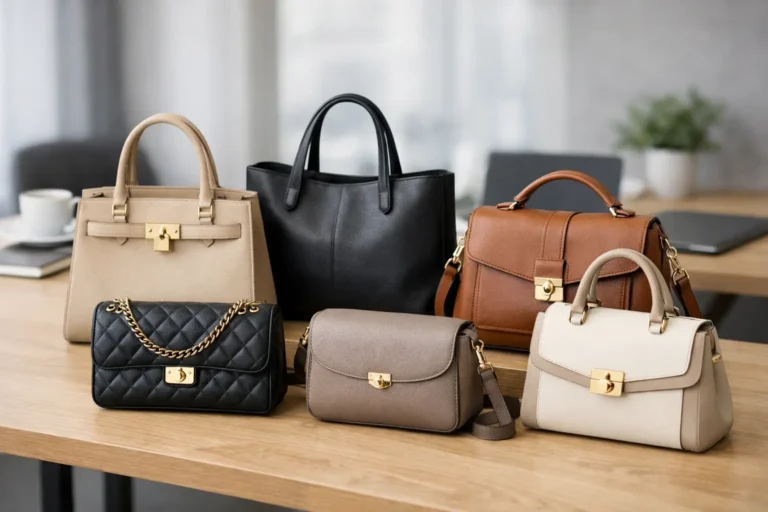
For work or polished daytime dressing, statement accessories look strongest when they sharpen a clean outfit instead of making it louder. Try a structured handbag in a rich texture, a refined chain necklace over a crisp button-down, or a sleek belt over a blazer dress. These pieces create presence without distracting from the overall look.
For evening, you can push further. Metallic finishes, stones, satin, shine, and stronger contrast all feel natural after dark. The trick is still balance. A sequined bag, chandelier earrings, and embellished shoes can work together only if the outfit itself stays relatively disciplined.
For events, think about photography as well as comfort. Pieces that look beautiful in motion and from a distance tend to perform best. Earrings, cuffs, bags, and shoes usually create more impact in photos than tiny layered details.
Some of the most stylish accessory moments come from contrast rather than perfect matching. A feminine dress with a strong cuff. Tailored suiting with bold earrings. Relaxed denim with a luxurious heel and sculptural bag. This tension makes the outfit feel modern and curated.
Matching everything too closely can sometimes make a look feel dated. Instead of searching for identical finishes, look for harmony. Gold jewelry can work with a tan bag and chocolate shoe. Silver earrings can look beautiful with black satin and a cool-toned clutch. Texture often ties a look together more elegantly than exact color matching.
This is also where personal style enters the picture. If your wardrobe leans minimal, your statement pieces can provide the drama. If your clothing already includes print, volume, or embellishment, your statement accessory may need to be more sculptural and less ornate. There is no single formula. The most polished result comes from understanding what your outfit already says before you add emphasis.
Different accessories change an outfit in different ways. Earrings frame the face and immediately affect how polished you look on camera or in person. Necklaces shape the neckline and can either soften or sharpen a top or dress. Belts define proportion and create a more tailored silhouette. Bags often carry the strongest lifestyle message – classic, fashion-forward, relaxed, or evening-ready. Shoes can completely redirect the mood of an outfit, turning basics into something more exclusive and styled.
If you are building a versatile wardrobe, start with statement pieces that still offer repeat wear. A sculptural gold earring, a premium textured bag, a belt with elevated hardware, and a standout heel in a neutral tone will go further than trend pieces that only work once. Curated accessories should feel special, but they should also integrate into your life.
The most common mistake is spreading the statement across too many pieces. If the earrings are oversized, the necklace is chunky, the bag is embellished, and the shoes are metallic, the eye has nowhere to land.
Another mistake is ignoring proportion. Petite frames can absolutely wear bold pieces, but scale should still feel intentional. Likewise, taller silhouettes can handle volume beautifully, but that does not mean every accessory needs to be oversized. The goal is visual balance, not maximum impact from every angle.
Finally, do not underestimate grooming. Statement accessories look more luxurious when paired with polished hair, neat tailoring, and fabrics that hold their shape. A bold accessory can elevate a simple outfit, but it cannot rescue one that feels unfinished.
If you want getting dressed to feel easier, stop treating accessories as last-minute additions. Build outfits with them in mind from the start. That shift makes your wardrobe feel more intentional and far more luxurious.
One of the smartest ways to shop is to choose accessories that fill a styling gap. Maybe your closet has plenty of dresses but needs evening earrings. Maybe your neutral wardrobe wants a handbag with richer texture or color. Maybe your basics would feel instantly sharper with a premium belt or standout shoe. At Ceremoniale, this is where curated shopping becomes especially valuable – choosing pieces that do more than decorate, and instead transform the way your wardrobe works.
The best statement accessories do not overpower your style. They reveal it. Wear the piece that deserves attention, give it room to lead, and let the rest of the outfit follow with intention.






Leave a comment