
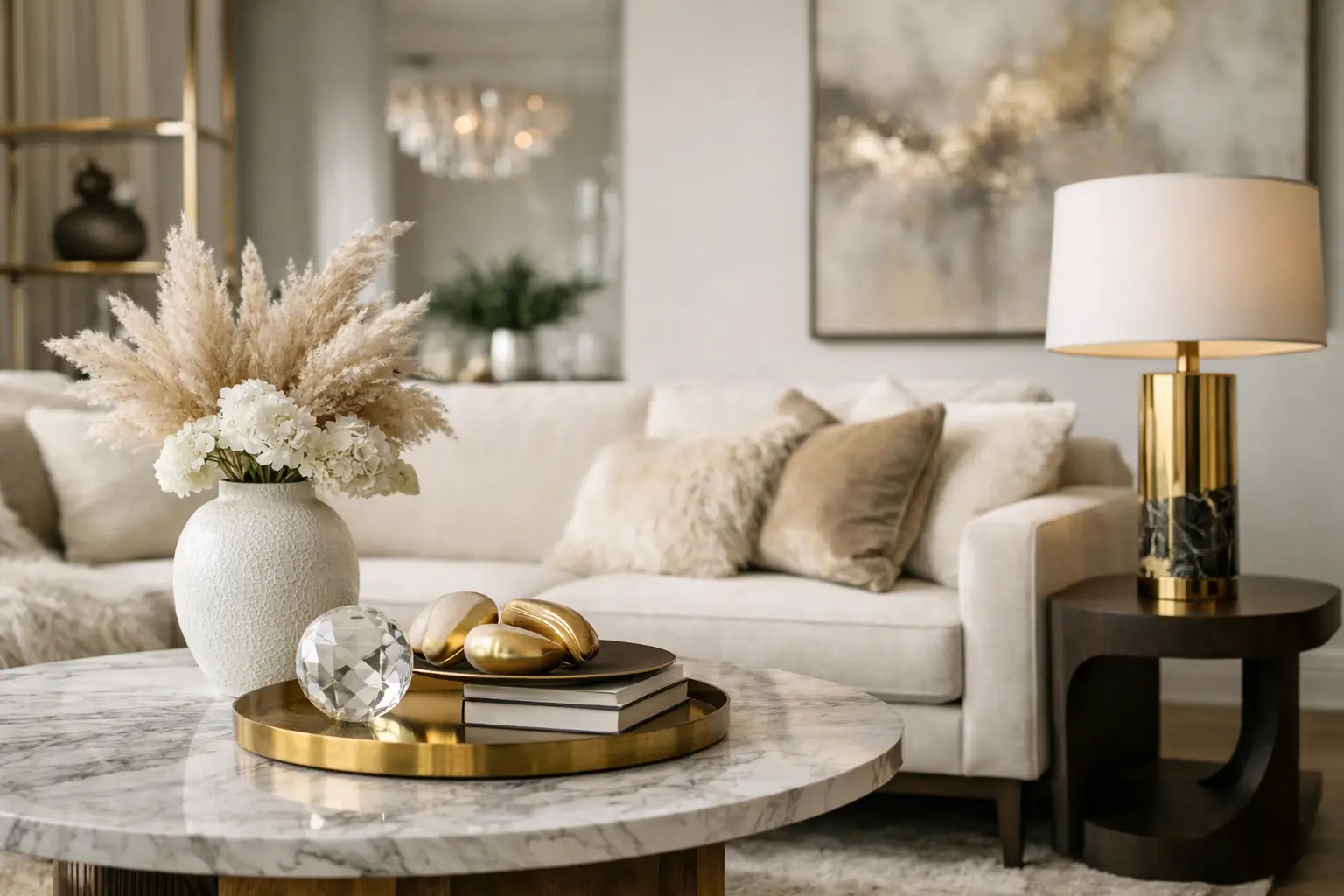
A curated home rarely comes from buying everything at once. It comes from restraint, taste, and the confidence to choose fewer pieces that do more. If you have been wondering how to create a curated home, the goal is not to make every room look expensive. It is to make your space feel intentional, polished, and unmistakably yours.
The difference is easy to spot. A home that feels styled but not curated often has plenty of attractive things, yet nothing truly connects. A curated home has rhythm. The materials speak to each other. The colors are considered. The practical pieces are just as beautiful as the decorative ones. Even the smallest details, from a tray on a coffee table to the texture of bath linens, support the larger mood.
Curated does not mean formal, untouchable, or filled with designer labels. It means selected with care. Every room feels edited rather than crowded, elevated rather than overdone. There is usually a point of view behind it, whether that is warm modern, soft classic, organic minimalism, or a more eclectic mix with refined edges.
This is also where many people get stuck. They assume a curated home requires strict matching or a full renovation. In reality, it is often the result of better decisions, not bigger spending. A premium-looking home can come from thoughtful lighting, richer textures, upgraded accents, and furniture that feels balanced in scale.
The fastest way to lose a curated look is to shop without a clear visual direction. Before you add another throw pillow or accent chair, decide how you want your home to feel. Calm and tailored. Soft and layered. Crisp and modern. Collected and romantic. Those emotional cues are more useful than chasing whatever is trending this month.
Look at your current space with a sharper eye. Notice what already works. Maybe your dining area has elegant lines but needs warmer lighting. Maybe your bedroom has good foundations but lacks contrast and softness. Keep the pieces that support the feeling you want, then build around them.
If your style shifts from room to room, that is not always a problem. A curated home does not have to be identical throughout. It does, however, need some visual continuity. Repeating certain finishes, colors, or silhouettes helps the entire home feel more composed.
A refined home starts with the elements that take up the most visual space. That usually means furniture, rugs, lighting, and large textiles. If those pieces feel random, the room will struggle no matter how many decorative accents you add later.
Begin with proportion. One of the biggest reasons a room feels unfinished is that the scale is off. A tiny rug under substantial seating makes the room feel disconnected. A coffee table that is too small can look like an afterthought. Oversized art can be striking, but only if it relates to the wall and furniture around it. Curated spaces feel calm because nothing seems accidental.
Material choice matters just as much. If everything in a room is the same finish or texture, the result can feel flat. If every surface competes, the space can feel chaotic. The most luxurious rooms usually blend contrast with discipline. Think soft upholstery against sleek metal, natural wood beside glossy ceramic, or crisp bedding softened by a quilted throw.
This is where an accessible premium approach works beautifully. You do not need every item to be an investment piece. You need a few strong anchors and a supporting cast of elevated details.
Many homes are not under-designed. They are under-edited. Knowing what to remove is often more important than knowing what to buy.
Walk through each room and look for visual noise. Extra side tables, too many small objects, scattered colors, or decor that no longer reflects your taste can all weaken the overall effect. Clear surfaces enough to let your best pieces breathe. A console with one sculptural lamp, a stack of beautiful books, and a decorative object often feels more sophisticated than a crowded arrangement of unrelated items.
Editing also creates room for quality to stand out. A single elegant vase has more presence when it is not competing with six lesser accents. The same goes for bedding, tabletop pieces, and seasonal decor. Curated homes suggest confidence. They do not try to prove style through excess.
A polished space is rarely built from furniture alone. It is the layering that gives it depth. This is where a room starts to feel inviting, expensive, and complete.
Textiles are one of the most effective ways to add that dimension. Drapery instantly softens architecture and makes a room feel taller when hung correctly. Throw pillows can bring in pattern or subtle sheen. Rugs ground seating areas and create visual warmth. In bedrooms and baths, upgraded linens can change the feel of the room more than a major furniture swap.
Lighting is another defining layer. Relying on one overhead fixture tends to flatten a space. A curated home usually mixes ambient, task, and accent lighting. Table lamps, floor lamps, bedside lighting, and candlelight-friendly styling all contribute to a softer and more luxurious atmosphere.
Scent, while less visible, plays a quiet role too. A home that looks elegant but smells like yesterday’s takeout never fully lands. Candles, diffusers, and fresh air are small luxuries, but they shape how a room is experienced.
If you want your home to feel more composed almost immediately, tighten the color story. That does not mean every room has to be beige. It means the palette should feel deliberate.
A strong curated palette usually starts with a dependable base, then layers in a few repeating accent tones. Cream, taupe, black, soft gray, camel, olive, blush, navy, and muted green are popular for a reason. They are flexible, elevated, and easy to repeat in different materials.
If you love bold color, use it with intention. A jewel-toned chair, a dramatic piece of art, or richly colored glassware can be stunning when the rest of the room gives it space. If every item is making a statement, the room loses its hierarchy.
This is one of those areas where trend awareness should be balanced with longevity. A curated home can include current looks, but it should not depend on them. The most sophisticated rooms feel current and lasting at the same time.
A home without personality can feel like a showroom. A home with too much unchecked personality can feel busy. The sweet spot is a space that reveals taste through selection.
That might mean displaying a few fashion-inspired coffee table books, choosing serveware that makes everyday dining feel more special, or introducing decor with an artisanal or sculptural edge. It could also mean bringing in beautiful practical items, such as elegant storage, elevated pet essentials, or kitchen pieces that deserve to stay on display.
A curated home should support real life. If you have children, pets, or a busy household, that reality should shape your choices. Performance fabrics, concealed storage, washable materials, and durable finishes are not compromises. In a well-curated home, function is part of the luxury.
Trying to transform the entire house in one sweep usually leads to rushed decisions. It is smarter to work in layers, room by room, starting with the spaces that affect daily life the most.
The living room often offers the fastest visual payoff because it combines seating, lighting, textiles, and decor in one place. Bedrooms are equally impactful because better bedding, softer lighting, and thoughtful accents create an immediate sense of retreat. Kitchens and bathrooms may require fewer decorative changes, but upgraded countertop pieces, coordinated accessories, and cleaner styling can still elevate them significantly.
This slower approach has another advantage. It helps you notice what your home actually needs. One room may call for softness and warmth. Another may need structure and storage. Curating well means responding to the room in front of you, not forcing the same formula everywhere.
For shoppers who want elevated pieces without the strain of full luxury pricing, a collection-driven approach makes the process feel more approachable. Ceremoniale reflects that sweet spot well, with design-forward home finds that make it easier to build a cohesive look through handpicked details rather than one dramatic purchase.
The homes that feel most refined usually share one trait: consistency of standard. Not every item is expensive, but every item earns its place. The tray is attractive. The mirror suits the wall. The blanket feels as good as it looks. The storage does not break the mood of the room.
That standard is what turns decorating into curating. It asks a little more of each purchase, but it also prevents the waste and clutter that come from impulse buying. Over time, your home begins to reflect a clearer point of view – elegant, considered, and personal.
If you want your space to feel more elevated, start smaller than you think. Edit one surface. Upgrade one layer. Choose one room to refine with more intention. A curated home is not built in a weekend. It is shaped piece by piece, with taste leading every choice.









Leave a comment