
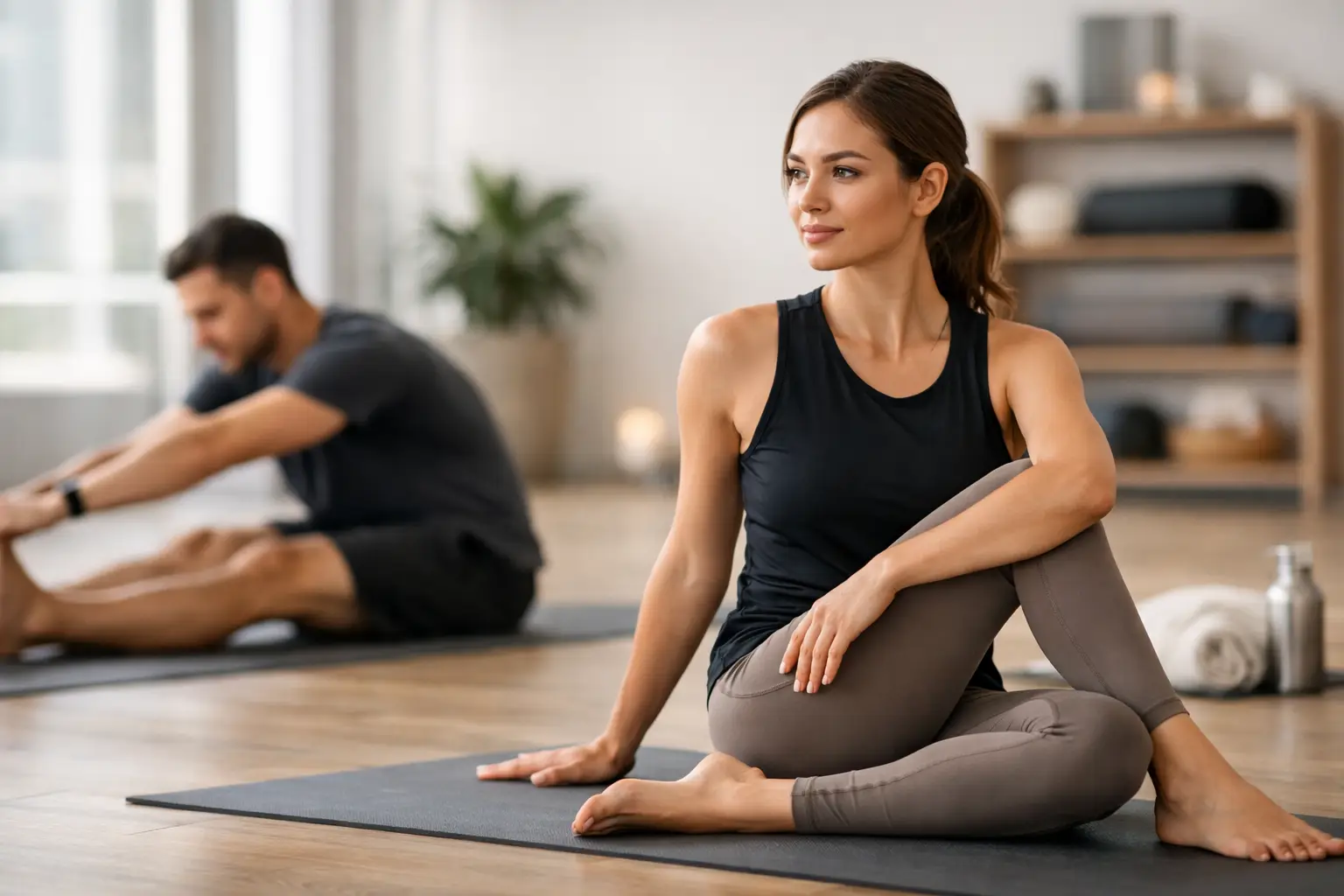
Some workouts leave you feeling wrung out. Yoga workouts tend to do something more refined – they challenge the body while returning a sense of balance, poise, and control. For anyone building a more elevated daily routine, that mix of strength and calm is part of the appeal.
Yoga has moved far beyond the studio stereotype. It now fits beautifully into modern living because it asks for very little space, adapts to almost any schedule, and delivers benefits you can feel in practical ways. Better posture at your desk, more mobility when you wake up, steadier energy in the afternoon, and a quieter mind before bed all make a difference.
There is a reason yoga remains relevant even as fitness trends come and go. It offers a rare combination of sculpting, stretching, breath control, and mental reset in one practice. That makes it especially appealing for people who want their wellness habits to feel polished rather than punishing.
A well-designed yoga session can strengthen your core, improve balance, and increase flexibility without the high impact that leaves joints feeling overworked. It can also complement other movement styles. If you walk, lift weights, run, or simply spend long hours sitting, yoga supports the body in ways many traditional workouts skip.
That said, yoga is not one single experience. A slow restorative class and a fast-paced power flow can feel like entirely different disciplines. The best choice depends on what you want from your time – recovery, tone, focus, endurance, or stress relief.
If your goal is strength, look for power yoga, vinyasa, or athletic flow classes. These styles move continuously, challenge stability, and often include repeated planks, lunges, and standing balances. They can leave you genuinely sweaty while still feeling graceful.
If you want flexibility and decompression, hatha or gentle yoga may be a better match. These formats usually move at a slower pace, giving you more time to settle into each shape and notice where your body holds tension. For many beginners, this is the most approachable place to start.
If stress is the main issue, restorative yoga or yin yoga can be surprisingly effective. These practices use longer holds and fewer transitions, which helps shift the nervous system out of constant urgency. They may not look dramatic, but they can be powerful in the way they restore your energy.
For a more balanced approach, many people do best with a mix. Two more active sessions each week paired with one slower mobility-focused practice often creates a sustainable rhythm. It feels curated rather than extreme, which is usually why it lasts.
A good workout burns calories or builds strength. The right workout fits your life well enough that you keep returning to it. That is where yoga often stands apart.
If you only have twenty minutes before work, a focused flow can still be worthwhile. If your evenings feel crowded, a ten-minute stretching sequence may be more realistic than a full class. Consistency matters more than chasing the most impressive routine.
There is also the question of energy. Some mornings call for strong standing poses and a brisk pace. Other days, your body may need hip openers, spinal twists, and breathing exercises instead. The most effective yoga practice is not always the hardest one. It is the one that meets you where you are.
The physical benefits get the most attention, but the full effect is broader. Regular practice often improves posture first. You become more aware of how you sit, stand, and carry tension through your shoulders and neck. That alone can change how you feel throughout the day.
Balance tends to improve next. Even simple single-leg poses ask the body to stabilize in a controlled way, which supports coordination and body awareness. Over time, movements can start to feel more elegant and less effortful.
Strength builds more quietly than many people expect. Yoga uses body weight in deliberate, sustained positions, which can be demanding. Arms, glutes, legs, and deep core muscles all work together rather than in isolation.
Then there is flexibility, which deserves a more nuanced view. Yoga can improve range of motion, but progress is rarely about forcing deeper stretches. It comes from regular, patient practice and better muscular control. Pushing too aggressively usually creates discomfort, not refinement.
The mental shift matters too. Breath-led movement encourages focus, and that can make even a short session feel clarifying. For people managing work, family logistics, and nonstop digital noise, that sense of internal order is a genuine benefit.
Home practice has become more attractive for good reason. It is private, convenient, and easy to shape around your own preferences. You do not need a picture-perfect setup. You need enough room to extend your arms, a supportive mat, and a little consistency.
Start with short sessions. Fifteen to twenty minutes is enough in the beginning. Longer classes sound appealing, but shorter routines are easier to repeat, and repetition is what creates results. Choose a beginner-friendly flow that includes foundational poses such as downward dog, warrior variations, bridge, child’s pose, and seated folds.
Pay attention to pacing. If you move too quickly, alignment tends to disappear. If you move too slowly in a style that is meant to be active, it can feel frustrating. A smooth, moderate rhythm usually works best while you are learning.
Comfort matters more than people admit. If your mat slips, your room feels cramped, or your clothing pulls in the wrong places, practice becomes distracting. An intentional setup creates a more premium experience, and that can make the habit more inviting.
One of the most common mistakes is treating yoga like a flexibility contest. You do not need to touch your toes, straighten every leg, or match the deepest version of a pose. Shape should support your body, not strain it.
Another mistake is overlooking breath. It may sound secondary, but breath is part of what makes yoga feel different from simple stretching. When movement follows steady breathing, the practice becomes more controlled and less chaotic.
Many beginners also do too much too soon. Daily hour-long sessions are not necessary. Three or four manageable practices each week is often enough to feel stronger, looser, and more grounded.
The routines that last are usually the ones that feel good to step into. Think of yoga as part of your environment, not just another item on a to-do list. A quiet corner, a clean mat, soft lighting, and a scheduled time can turn practice into a ritual rather than a task.
That ritual can be surprisingly luxurious in the best sense of the word. It is less about extravagance and more about intention. A glass of water nearby, a fresh towel, a supportive cushion, and clothing that moves well can shift the whole mood. At Ceremoniale, that idea of curated living applies just as much to wellness as it does to style and home.
If motivation comes and goes, attach yoga to a specific part of your day. A ten-minute morning flow before coffee, a lunchtime reset between meetings, or an evening stretch before showering can all work. The cue matters because it removes the need to negotiate with yourself.
Keep your expectations sophisticated but realistic. Some weeks you will want dynamic sessions that leave you energized. Other weeks, the win is simply rolling out your mat and moving for twelve minutes. Both count.
It depends on your goal. If you want better mobility, improved posture, moderate strength, stress relief, and a more balanced daily routine, yoga can absolutely stand on its own. For many people, that is more than enough.
If your goal is maximum muscle growth or specific cardiovascular performance, yoga may work better as part of a broader fitness plan. Pairing it with walking, strength training, or cycling can create a more complete approach. There is no purity test here. The smartest routine is the one that supports your life, your body, and your schedule.
This is also why comparing yoga to every other workout misses the point. Yoga does not need to replace everything to be valuable. It offers a distinct return – strength with mobility, movement with composure, effort with restoration.
The best yoga workouts are not the ones that look the most advanced. They are the ones that help you feel strong, aligned, and more at ease in your own life. Start there, keep it simple, and let the practice become part of the way you care for yourself.









Leave a comment