
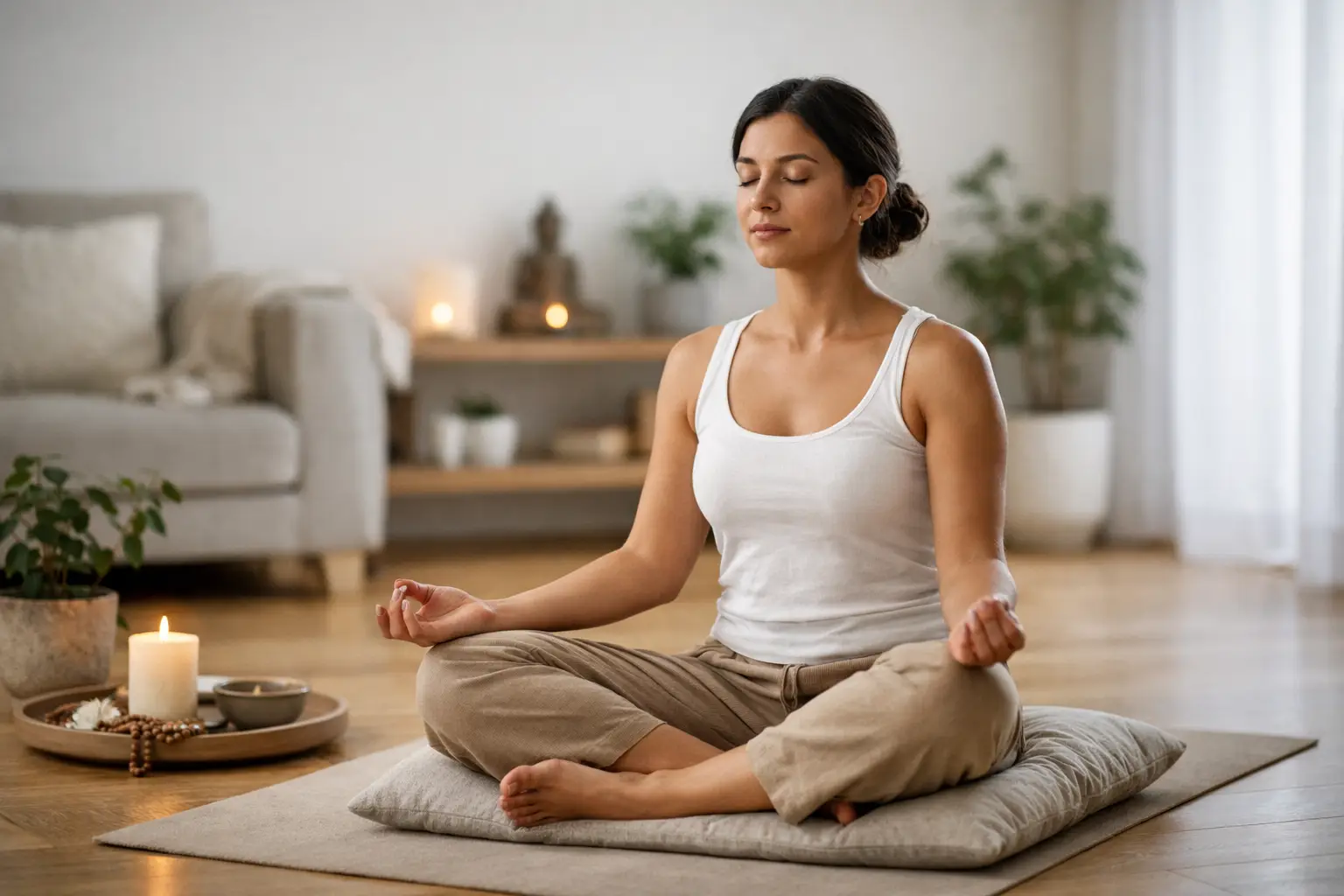
A beautiful home does more than look polished. It changes how you feel the moment you walk in. If you have been wondering how to start meditation at home, the good news is that you do not need a spare room, a perfect morning routine, or a deep knowledge of mindfulness to begin. You need a quiet corner, a little consistency, and a setup that feels inviting enough to return to.
Meditation often gets packaged as either highly spiritual or highly disciplined. For most people, it is neither. It is simply the practice of sitting still long enough to notice your breath, your thoughts, and the pace of your day. At home, that practice can become less of a performance and more of a private ritual – one that adds calm, clarity, and a subtle sense of luxury to everyday life.
Home is where your habits either settle in or disappear. That is exactly why meditation belongs there. A studio class can be inspiring, but it also depends on schedules, travel time, and someone else setting the mood. A home practice is more flexible. It lets you meditate for three minutes before the household wakes up or ten minutes before bed without turning it into a major event.
There is also something powerful about associating peace with your own space. When you return to the same chair, cushion, or corner each day, your mind starts to recognize it as a cue to slow down. Over time, that area can feel as curated and intentional as any other part of the home – not ornate, just thoughtfully arranged.
The trade-off is that home also comes with distractions. Laundry sits in view. Notifications interrupt. Family members need things. That does not mean you are failing. It means you are practicing in real life, which is often more useful than finding calm only under ideal conditions.
The easiest mistake beginners make is trying to build an advanced ritual on day one. They buy too many accessories, set unrealistic goals, and assume silence must feel immediate. A better approach is to start with the simplest version that you can repeat.
Choose a time you can protect with reasonable consistency. For some, that is early morning before email and noise take over. For others, it is the transition between work and evening. There is no universally perfect hour. The best time is the one that fits your actual life rather than your imagined best self.
Then choose your spot. This does not need to be a dedicated meditation room. A corner of the bedroom, a bench by a window, or a quiet spot in the living room can work beautifully. Comfort matters, but so does visual calm. A soft cushion, a supportive chair, a throw, and gentle light can make the experience feel less clinical and more inviting.
Once your space is set, begin with five minutes. Not twenty. Not an aspirational half hour. Five minutes is enough to establish the habit without making it feel heavy. Set a soft timer and sit in a position you can maintain comfortably. Upright is helpful because it keeps you alert, but you do not need a picture-perfect pose.
Close your eyes or soften your gaze. Notice your breath as it moves in and out. You are not trying to breathe in a special way. You are simply paying attention. When your mind wanders – and it will – gently bring it back to the breath. That return is the practice.
Your environment shapes your willingness to come back. If your space feels cold, cluttered, or improvised every time, meditation can start to feel like another task. If it feels calm and curated, it becomes easier to protect.
Think in terms of atmosphere rather than equipment. You may want a floor cushion, but a supportive accent chair can be just as effective. Natural textures, soft lighting, and a clean surface nearby can signal ease without demanding much square footage. Even one elegant detail, like a candle, a ceramic dish, or a folded throw, can help the area feel intentional.
Scent and sound can help, but they depend on your preferences. Some people focus better in total quiet. Others settle more easily with soft instrumental music or ambient sound. Candles, incense, or essential oils can add warmth, though they are optional, not essential. If fragrance distracts you, skip it.
The goal is not to create a wellness showroom. It is to remove friction. When the space is ready and visually serene, starting feels easier. That is often the difference between a practice that lasts three days and one that becomes part of your rhythm.
Beginners often assume meditation means emptying the mind. It does not. Thoughts will continue to arrive. Grocery lists, awkward conversations, work stress, random memories – all of it may appear the moment you sit down. That is normal.
Your job is not to stop thinking. Your job is to notice that you got pulled away and then return your attention to one anchor. For most people, the breath is the simplest anchor. You can feel it at the nose, the chest, or the belly. Pick one place and keep coming back to it.
If breath awareness feels frustrating, try a short phrase repeated silently, such as calm in, calm out. You can also count your breaths from one to ten and start again. Some people respond better to guided meditation, especially in the beginning. Others prefer silence because it feels cleaner and less performative. It depends on your personality and your stress level.
Restlessness does not mean meditation is not working. In many cases, it means you are finally noticing how busy your mind has been all along. That awareness can feel uncomfortable before it feels soothing.
If you feel bored, shorten the session. Boredom is often a sign that you started with too much time. If you feel sleepy, meditate seated instead of lying down, or move your practice earlier in the day. If your home is noisy, use that as part of the exercise. Notice the sound, then return to your breath instead of waiting for perfect silence.
Many people also worry that they are doing it wrong because they do not feel instantly peaceful. Meditation is not a mood product with immediate, polished results every single day. Some sessions will feel calm. Others will feel messy. The value comes from repetition, not perfection.
Consistency matters more than duration. Five minutes every day is more transformative than twenty minutes once a week. The habit teaches your nervous system what settling down feels like. Over time, that sense of steadiness often extends beyond the session itself – into how you respond to stress, interruptions, and the overall tone of your home.
The most lasting routines are attached to something you already do. Meditate after making coffee, after your skincare routine, or before you get into bed. Pairing it with an existing habit makes it feel less like a separate project and more like a natural part of the day.
It also helps to lower the threshold for success. Instead of saying you must meditate for fifteen minutes daily, decide that sitting down counts, even if the session is brief. This keeps momentum intact on busy days. A small ritual you maintain is more valuable than a perfect ritual you abandon.
If you enjoy surrounding yourself with beauty at home, let that support the practice. A thoughtfully chosen cushion, a soft blanket, a calming lamp, or a clean tray for your essentials can make the ritual feel more elevated. That is not about excess. It is about creating an environment that reflects the way you want to live – calm, intentional, and quietly luxurious.
In the first week, keep it minimal. Sit for five minutes each day and focus only on showing up. In the second week, stay with five minutes or extend to seven if it feels natural. By the third week, you will likely know whether mornings or evenings serve you better, whether silence helps more than guided audio, and whether your chosen spot truly works.
This gentle approach gives you room to refine the ritual instead of forcing it. Meditation is personal. Some people want structure. Others need softness. Some want a serene corner with layered texture and candlelight. Others want a plain chair and a timer. Both are valid if they help you return.
A home should support more than productivity and presentation. It should also offer restoration. If you are learning how to start meditation at home, start smaller than you think, make the space feel welcoming, and let the practice grow with you. A few quiet minutes, repeated with care, can change the entire mood of a day.









Leave a comment