
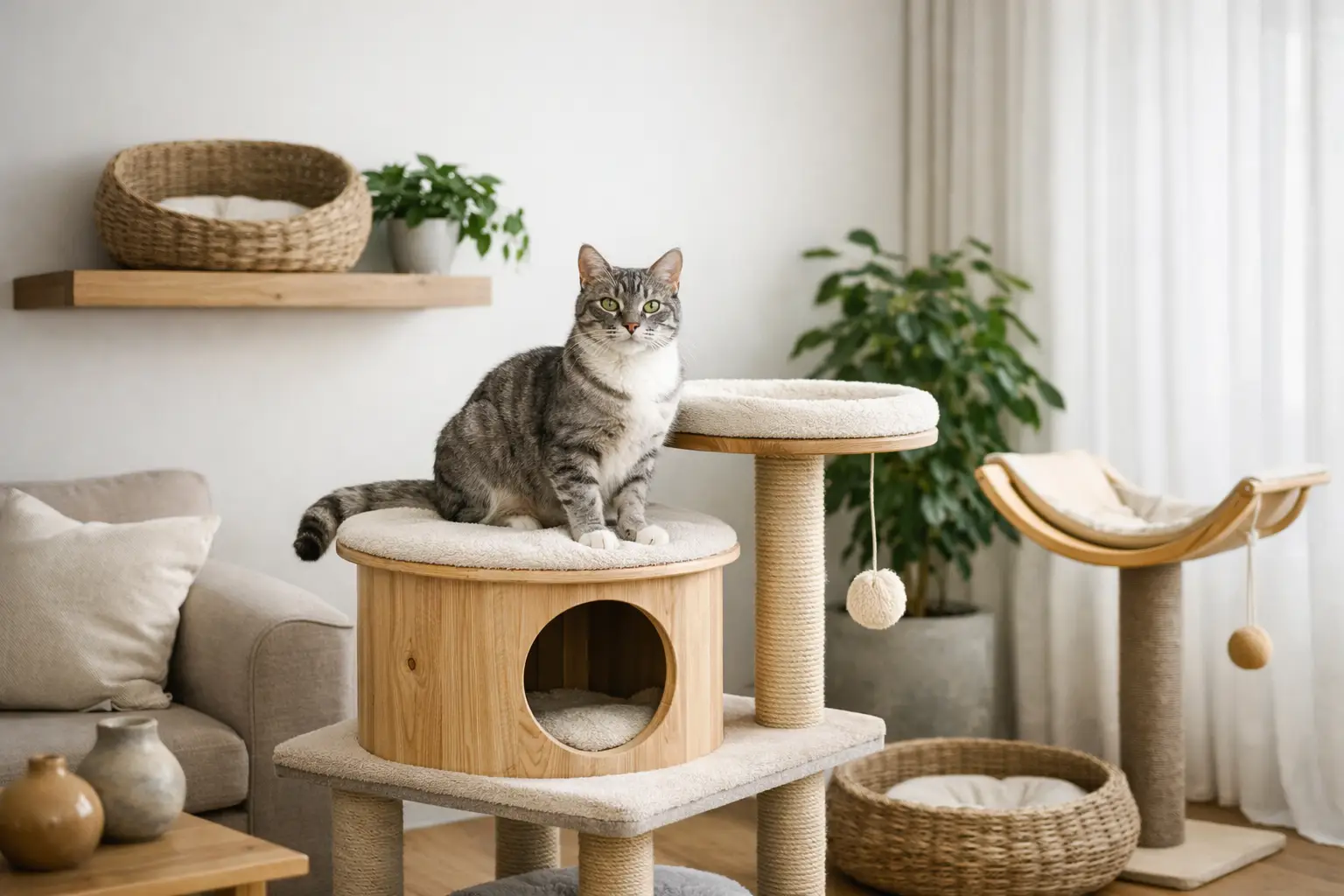
A cat tree wedged awkwardly in front of the window can make even the most thoughtfully styled apartment feel crowded. The best cat furniture for apartments solves that problem beautifully: it gives your cat a place to climb, stretch, scratch, and nap while preserving the calm, polished look you want for your home.
For a smaller space, pet furniture should earn its footprint. Think vertical silhouettes, refined neutral finishes, and multi-purpose designs that feel more like a considered piece of decor than an afterthought. The goal is not to hide your cat’s needs. It is to choose pieces that make a comfortable home for them and a more elegant home for you.
Square footage matters, but floor plan matters more. A compact studio with tall ceilings may have room for an impressive climbing tower, while a larger one-bedroom with limited open wall space may benefit from a low-profile window perch or a slim scratching post. Before choosing a piece, look at the underused areas in your home: the corner beside a sofa, a bright window, the end of a hallway, or the space next to a bookcase.
The most successful apartment pieces serve more than one feline instinct. A tree with staggered platforms offers height, rest, and observation. A chaise-style scratcher provides a lounging spot while protecting your rug. An enclosed cat house can give a shy pet privacy while doubling as a discreet side table. These thoughtful combinations help you add less furniture, not more.
Material deserves attention, too. Plush carpeting can feel cozy, but it may collect fur quickly and can look worn sooner in a refined living room. Look for tightly woven fabrics, durable sisal, natural wood tones, and cushions with removable covers when possible. Soft cream, warm taupe, charcoal, and light oak tend to blend gracefully with a wide range of interiors.
A tall, slender cat tree is often the most valuable choice for an energetic indoor cat. It gives them the vertical territory they naturally seek without claiming the same amount of floor space as a wide, sprawling tower. Place one near a window if possible. The changing view of passing people, birds, and trees provides a simple form of daily enrichment.
Choose a stable base over a towering but flimsy design. A cat tree should not wobble when your pet jumps to the highest platform, especially in a rental where you do not want a toppled piece damaging floors, walls, or nearby decor. For larger cats, check platform dimensions and weight guidance rather than choosing solely by appearance.
A sculptural tree in wood, woven rope, or a soft neutral fabric can feel especially at home beside a reading chair or console. Rather than treating it as clutter, style the area around it with the same restraint you would use for any accent furnishing.
For apartments where every inch counts, a window perch offers an elegant answer. It uses space that would otherwise sit empty and gives cats a coveted front-row seat to the outdoors. A secure, padded perch can become a favorite nap destination without interrupting the flow of your room.
This option works best for cats who enjoy watching the world and for homes with a sturdy, accessible window. Measure the ledge and inspect the mounting system before buying. Suction-mounted styles can be wonderfully unobtrusive, but they need careful installation and occasional checks. A sturdier frame-mounted perch may be the better investment for a heavier cat or a particularly enthusiastic jumper.
The visual advantage is clear: the furniture almost disappears into the architecture of the room. Add a light washable blanket, and it becomes a cozy little retreat that does not compete with your larger pieces.
A covered cat house is ideal for cats who prefer a quiet place to retreat from guests, household activity, or the hum of a busy city street. In an apartment, it can also answer a practical design question: where does the pet bed go when you want the living room to feel composed?
Look for an enclosed design that can function as an ottoman, end table, or bench. These pieces are especially useful in a bedroom or living area, where open pet beds can sometimes look visually scattered. A rounded woven design brings texture to a soft, relaxed room, while a clean-lined upholstered cube feels more tailored and contemporary.
The trade-off is that an enclosed house does not replace a cat’s need to scratch or climb. It is best as part of a smaller, intentional arrangement rather than the only item you bring home.
A quality scratching surface is not optional. It is one of the simplest ways to direct your cat away from the sofa arms, dining chairs, and bedroom rug you carefully selected. A low lounge scratcher works particularly well in apartments because it can slide beside a coffee table, under a console, or near your cat’s favorite resting spot.
Curved cardboard loungers are popular because many cats use them for both scratching and sleeping. For a more elevated look, consider a wood-framed scratcher or one with a sculptural silhouette. Replaceable scratching pads can be a smart choice, allowing you to refresh the surface without replacing the entire piece.
Location is as influential as design. Cats often scratch after waking up, so place a scratcher near their sleeping area. If they have already chosen a chair corner as their preferred target, place a new scratching option directly beside it at first. A beautiful piece is most effective when it is positioned where your cat actually wants to use it.
Wall-mounted shelves, steps, and hammocks can create a luxurious cat playground without taking over the floor. For active cats, a curated wall arrangement gives them a pathway to explore and an elevated place to rest above the activity of the room. It can look remarkably intentional when finished in a wood tone that echoes your shelving, floors, or cabinetry.
This option depends on your lease and wall construction. Renters should review their agreement before drilling, and anyone installing a climbing system should use appropriate anchors and follow the weight guidance closely. If permanent installation is not possible, a freestanding vertical tree is the more practical choice.
When wall furniture is an option, restraint creates the strongest result. A few well-placed elements on one wall can feel architectural. Filling every available space may feel busy and can overwhelm a compact room.
A low-energy senior cat may be happiest with a plush step-up bed and a gentle scratcher rather than a six-foot climbing tower. A young, athletic cat may need height and movement to stay content indoors. Multi-cat apartments usually benefit from more than one resting zone, since even affectionate pets often value separate territory.
Pay attention to your cat’s habits before making a purchase. Do they spend afternoons looking out the window? Choose a perch. Do they hide under the bed when visitors arrive? Add an enclosed retreat. Do they stretch up the side of your sofa? A tall, upright scratching post should be part of the plan. Furniture that matches your cat’s real behavior is far more likely to stay in use.
The most refined pet spaces are edited, not overfilled. Start with one anchor piece, such as a narrow tree or enclosed lounge, then add a complementary scratcher if needed. Keeping finishes within the same color family makes the arrangement feel curated, even when the pieces serve very practical purposes.
A small washable mat beneath a tower can define the area and help catch loose sisal or fur. Nearby baskets can hold toys out of sight, while a simple ceramic water bowl can feel more considered than brightly colored plastic. These details allow everyday pet care to sit naturally within a home designed for comfort and style.
The right cat furniture does more than occupy your pet while you are away. It gives them a sense of territory in a smaller home, while allowing every room to retain the elegant, welcoming atmosphere you love. Choose the piece that fits your space, your cat’s personality, and the way you want to live together.









Leave a comment