
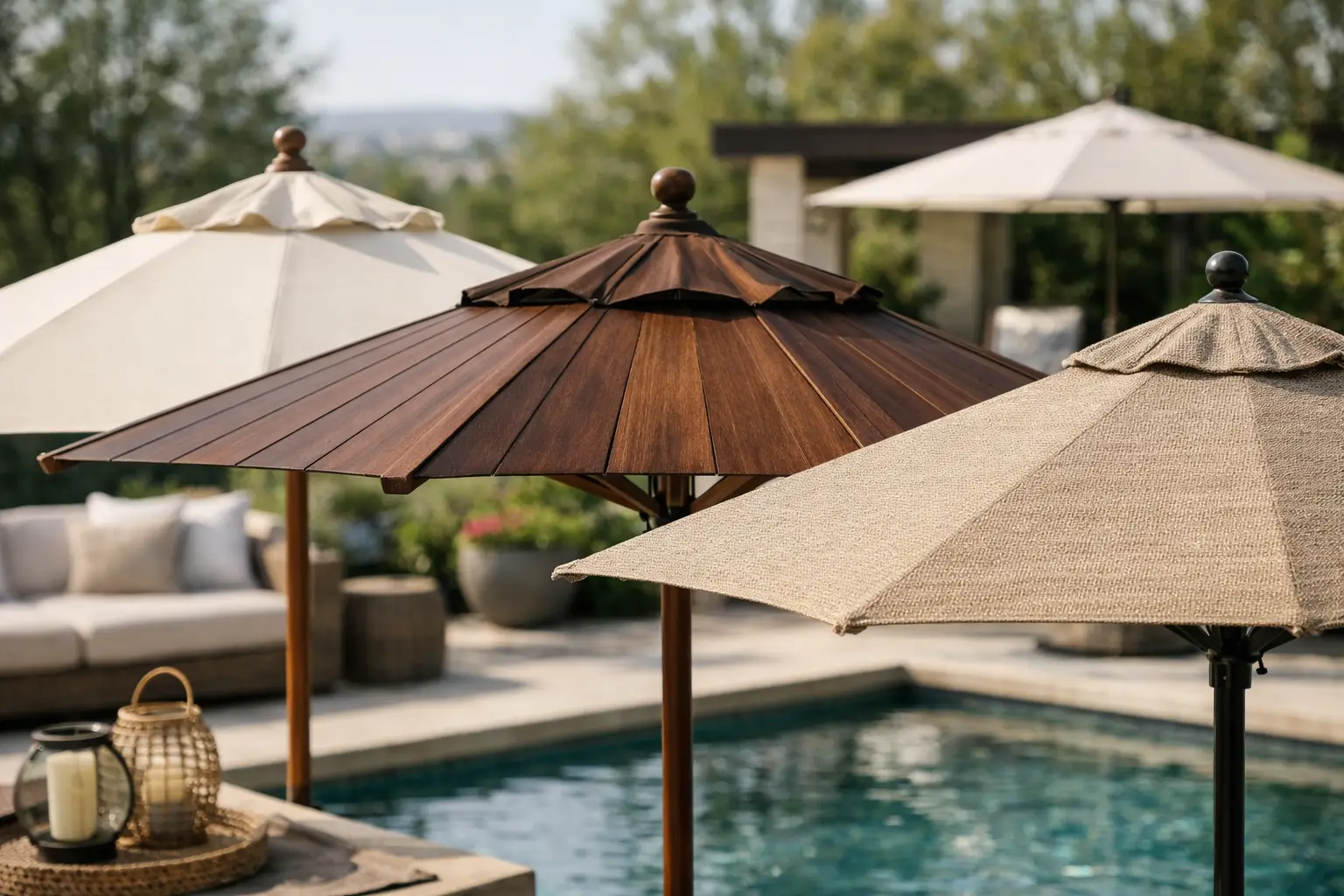
A patio umbrella can make the difference between an outdoor space that looks unfinished and one that feels ready for long lunches, quiet coffee rituals, and golden-hour entertaining. The best patio umbrella materials do more than cast shade: they preserve color, stand gracefully against changing weather, and bring a refined finish to the furniture beneath them.
A beautiful umbrella is a considered investment in comfort and atmosphere. The right canopy and frame depend on where you live, how often you use your patio, and whether your outdoor style leans coastal, contemporary, classic, or resort-inspired. Here is how to select a premium combination that looks polished now and continues to perform season after season.
Before choosing a color or silhouette, consider what your umbrella must handle. A covered porch with gentle morning sun places very different demands on materials than an open pool deck exposed to intense heat, afternoon gusts, and summer rain.
For sun-drenched patios, fade resistance should lead the decision. In windy areas, the strength and flexibility of the frame matter just as much as the canopy fabric. If the umbrella will be stored during storms and used mainly for weekend gatherings, you can prioritize a more decorative finish. For a piece that stays outdoors throughout the season, weather-ready construction is worth the upgrade.
The most elevated choice is rarely about one material alone. A long-lasting patio umbrella pairs a substantial pole with flexible ribs and a canopy engineered to retain its color. Think of it as outdoor decor with a practical purpose: every element should support both the look and the longevity of your retreat.
Solution-dyed acrylic is widely regarded as one of the finest canopy fabrics for outdoor living. Its color is integrated into the fibers during production rather than applied only to the surface, which gives it exceptional resistance to fading in direct sun. It also handles light moisture well, dries relatively quickly, and offers a soft, tailored appearance that feels far more luxurious than a standard synthetic canopy.
For a patio that receives regular use, acrylic is a standout choice. It is especially appealing in rich navy, crisp ivory, warm terracotta, and sophisticated striped designs, where color retention is essential to the overall look. Acrylic generally costs more than polyester, but its ability to stay vibrant and inviting can make it a better value over several summers.
No outdoor fabric is entirely maintenance-free. Pollen, sunscreen, and tree debris can still leave marks, so occasional gentle cleaning is part of keeping an acrylic canopy looking exclusive rather than weatherworn.
Olefin is another strong contender for an outdoor umbrella canopy. It resists moisture, mildew, and many stains, while offering reliable UV performance at a more accessible price point than solution-dyed acrylic. The fabric has a slightly more textured, casual feel, making it a lovely match for relaxed terraces, family patios, and poolside spaces.
Its primary trade-off is longevity under relentless sun. Quality olefin holds up well, but premium acrylic usually maintains its original color and hand-feel for longer in especially bright climates. If your umbrella receives moderate exposure or is closed and covered when not in use, olefin can deliver a polished result without stretching the budget.
Polyester is common in entry-level and mid-range umbrellas because it is lightweight, affordable, and available in an impressive range of colors and prints. It can be an excellent choice for renters, occasional hosts, or anyone who likes refreshing their patio palette with the seasons.
Look for polyester with a UV-resistant coating and a high fabric weight, as thinner versions tend to fade and wear more quickly. A vented canopy also helps it perform better in warm weather by allowing heat to rise and air to circulate. Polyester is practical, but it is not usually the material to choose for a permanent, high-exposure outdoor centerpiece.
Natural canvas offers a relaxed, classic look that feels at home in garden settings and traditional outdoor spaces. Its substantial texture can be striking against teak, wrought iron, and layered neutral cushions. However, cotton absorbs moisture more readily than performance fabrics and requires careful treatment to resist mildew and sun damage.
Canvas works best in protected areas or for umbrellas that will be brought inside after use. It brings character and charm, but it asks for more attention than acrylic, olefin, or polyester.
The pole, hub, and ribs determine whether an umbrella feels sturdy and sophisticated or flimsy after a few breezy afternoons. While the canopy gets most of the visual attention, the frame deserves equal consideration.
Powder-coated aluminum is one of the most practical frame materials for modern outdoor spaces. It is naturally resistant to rust, easy to move, and available in finishes ranging from matte black to champagne, bronze, and clean white. Aluminum pairs beautifully with contemporary dining sets and neutral lounge furniture, especially when you want a streamlined, resort-style effect.
Choose a thicker pole and quality hardware whenever possible. Lightweight does not have to mean delicate, but very thin aluminum can flex under pressure. A powder-coated finish is preferable because it adds an extra layer of protection against chips and corrosion.
A wood umbrella frame creates instant visual warmth. Eucalyptus, teak, and other hardwoods can complement woven seating, stone patios, and traditional garden landscapes with an inviting, collected feel. Wood also photographs beautifully, lending a natural sense of luxury to outdoor dining moments.
The trade-off is maintenance. Wood should be sealed or oiled as recommended, protected from prolonged standing water, and checked for cracks or finish wear. Teak is exceptionally durable, while eucalyptus can offer a more accessible alternative when properly cared for. For homeowners who enjoy maintaining beautiful materials, wood is a distinctive choice.
Steel frames offer welcome weight and stability, particularly for smaller center-pole umbrellas. Yet steel can rust if its protective finish becomes scratched or worn. It is best suited to covered patios, dry climates, or umbrellas that are stored indoors when not in use.
If you choose steel, inspect the coating carefully and avoid leaving it exposed through wet winters. The material can be dependable, but it requires more vigilance than aluminum.
Fiberglass ribs are a premium detail worth seeking, especially in breezy locations. Unlike rigid metal ribs, fiberglass can flex with a gust rather than bending permanently or snapping. It is lightweight, corrosion-resistant, and often used in higher-quality umbrellas designed for regular outdoor use.
For an open deck or coastal-inspired setting, an aluminum pole with fiberglass ribs is an especially thoughtful combination. It offers a clean look, dependable weather resistance, and the flexibility needed when the wind picks up.
For a refined dining patio that sees daily sun, choose a solution-dyed acrylic canopy with an aluminum frame and fiberglass ribs. This combination is tailored, durable, and easy to coordinate with premium outdoor furnishings.
For a sheltered balcony or covered porch, olefin or coated polyester can be a stylish, value-conscious choice. Pair it with aluminum for a lighter, easy-to-manage piece that still feels elevated. A wood frame with acrylic or canvas is ideal when the goal is a warm, garden-party aesthetic and you are prepared to close and protect the umbrella after each gathering.
Near a pool, prioritize materials that shrug off moisture and strong UV exposure. Acrylic or olefin canopies and powder-coated aluminum frames are the most effortless pairing. Soft neutral canopies feel serene, while a deep green, blue, or cabana stripe can turn a simple poolside arrangement into a destination-like escape.
Material quality matters most, but a few design details dramatically improve performance. A vented canopy reduces pressure from rising heat and passing breezes. Reinforced pockets where the ribs meet the fabric help prevent tearing. Sturdy crank mechanisms and corrosion-resistant hardware make daily opening and closing feel smooth rather than frustrating.
A weighted base is also nonnegotiable. Even the finest frame cannot compensate for an undersized base, and an umbrella should always be closed when winds become strong. Check the manufacturer’s guidance for the appropriate base weight, particularly with larger canopies and cantilever styles.
When the season ends, brush away debris, allow the canopy to dry fully, and store it with a fitted cover or indoors. This small ritual protects fabric color, preserves hardware, and keeps your patio looking beautifully cared for when warm weather returns.
The most stylish outdoor spaces are built through details that work as beautifully as they look. Choose materials that fit your climate and your habits, then let the umbrella become the finishing touch that invites everyone to stay a little longer.






Leave a comment