
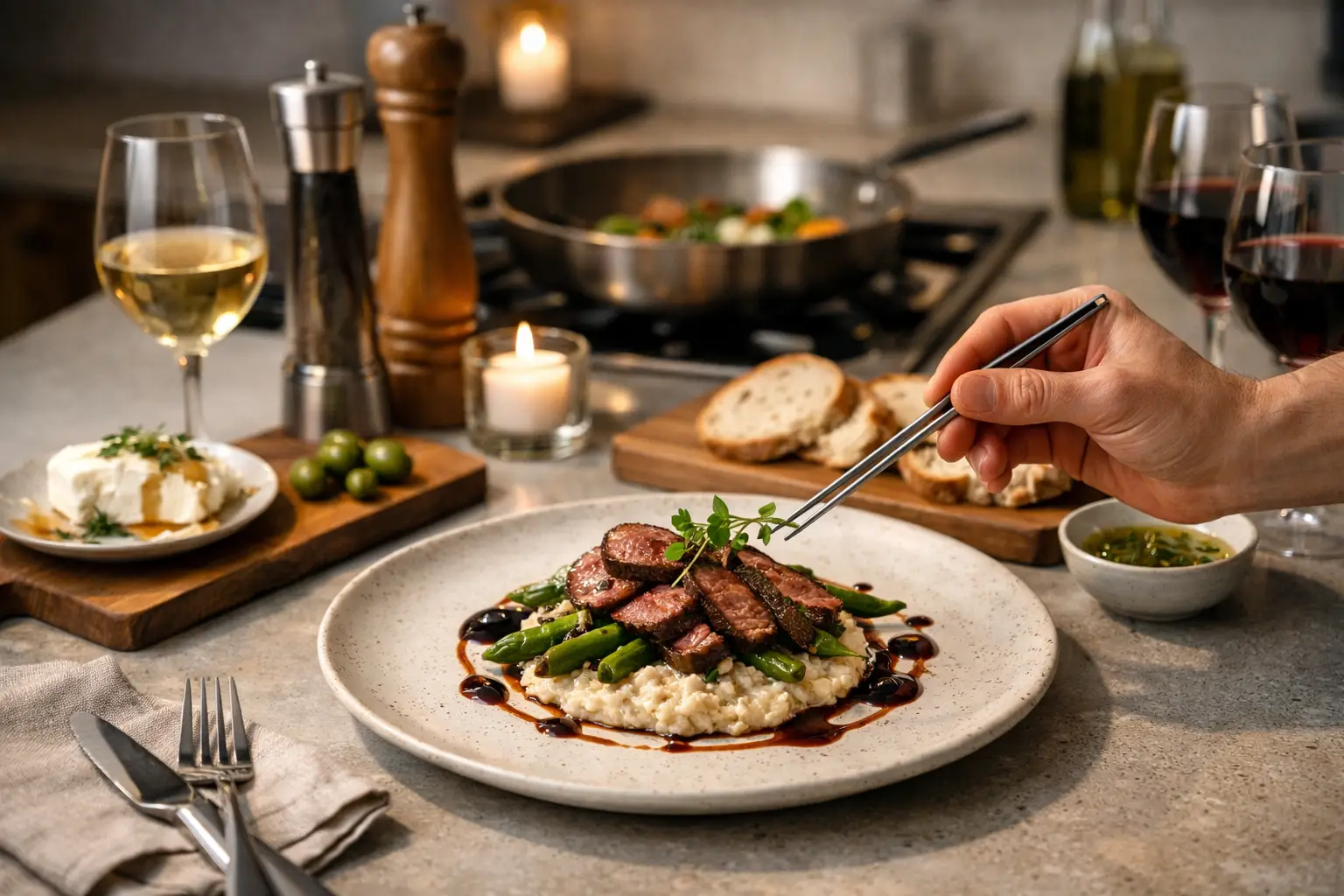
The difference between a rushed dinner and a memorable evening is often waiting in plain sight: the olive oil poured into a beautiful cruet, the cutting board that stays on the counter, the candle lit before the first plate is served. Cooking does not need to be complicated to feel special. With a few thoughtful choices, even a weeknight meal can carry the ease and polish of a well-styled gathering.
For a home that reflects your taste, the kitchen deserves the same attention as the living room or wardrobe. It is where practical routines meet personal rituals, and where a curated collection of useful, beautiful pieces can make every meal feel more intentional.
A kitchen becomes more inviting when its most-used pieces are within reach and visually considered. This does not mean filling every shelf with specialty gadgets. It means choosing a few premium essentials that make preparation more pleasant: a reliable chef’s knife, a substantial cutting board, a handsome set of measuring spoons, and cookware that performs as beautifully as it looks.
Material matters, but so does how a piece feels in your hand. A heavy-bottomed pan offers steady heat for sauces and sautés, while a sharp knife makes quick work of herbs, produce, and proteins. If you cook frequently, invest in the items that touch every meal. A colorful stand mixer or an elegant Dutch oven can bring personality to the room, but the best purchase is always the one you will use often.
Keep visual clutter in check. Decant everyday pantry staples such as pasta, flour, and coffee into matching containers if that suits your style, but do not create a system that becomes a chore to maintain. The goal is a kitchen that supports real life, not a display that cannot handle dinner on a Tuesday.
Great cooking begins before the stove is turned on. A small pantry of high-quality staples gives simple ingredients a more finished character and makes spontaneous meals far easier to pull together.
Choose an olive oil you enjoy tasting, flaky salt for finishing, freshly ground black pepper, good vinegar, dried herbs you replace regularly, and a few reliable spices. Add pantry conveniences that match the way you actually eat: canned tomatoes for pasta nights, broth for quick soups, grains for grain bowls, and beans for satisfying lunches. These are not glamorous purchases on their own, yet they create the foundation for food that tastes considered.
Fresh ingredients deserve the same selective approach. Instead of buying more produce than you can use, select a few versatile options with different roles. Bright citrus can lift roasted vegetables and salad dressings. Fresh herbs add color to eggs, fish, and pasta. A wedge of Parmesan, a loaf of crusty bread, and a carton of eggs can become a polished meal with very little planning.
There is a trade-off here. Premium ingredients can cost more, so reserve the splurge for elements you will notice: finishing oil, chocolate, cheese, or a special condiment. Everyday basics can remain simple and sensible.
The most confident home cooks are not necessarily making restaurant-level recipes every night. They understand a few dependable techniques and use them well. Roasting, pan-searing, simmering, and assembling are enough to create an impressive range of meals.
A sheet pan of vegetables roasted at high heat develops sweetness and crisp edges with minimal effort. A properly heated skillet gives chicken, salmon, or tofu a golden exterior. A gently simmered sauce becomes richer when given time, even if the ingredient list is short. For warm-weather evenings, there is elegance in not cooking much at all: arrange ripe tomatoes, soft cheese, herbs, and bread on a serving board, then let the ingredients speak for themselves.
Rather than trying to learn several new recipes at once, choose one technique for the week. Roast a tray of vegetables on Sunday, then use them in grain bowls, pasta, omelets, or wraps. This approach makes cooking feel less like a daily demand and more like an adaptable part of your routine.
A signature dish is not boring. It is a quiet form of hospitality, especially when it is made with care. Perhaps yours is lemony pasta, a polished roast chicken, or a salad with a dressing everyone requests. Repetition allows you to notice the details: when the pan is hot enough, how much salt the dish needs, and when to stop stirring.
The atmosphere around cooking influences how it feels. Before you begin, clear enough counter space to work comfortably. Put on music that shifts the energy of the room. Pour a sparkling water, tea, or glass of wine into something you enjoy holding. These small choices create a pause between the day’s obligations and the evening ahead.
Mise en place, the practice of gathering and preparing ingredients before cooking, is useful here, but it does not have to be rigid. For a simple meal, it may mean washing greens, chopping an onion, and placing your seasonings by the stove. For a dinner party, it can mean measuring, slicing, and setting out serving utensils in advance. The more demanding the menu, the more this preparation matters.
A few well-chosen kitchen accessories can make the ritual feel elevated without overcomplicating it. Think of a sculptural spoon rest, refined linen towels, a tray for oils and seasonings, or a graceful fruit bowl. Ceremoniale’s approach to the home is rooted in this balance: practical pieces should still contribute to the room’s overall sense of sophistication.
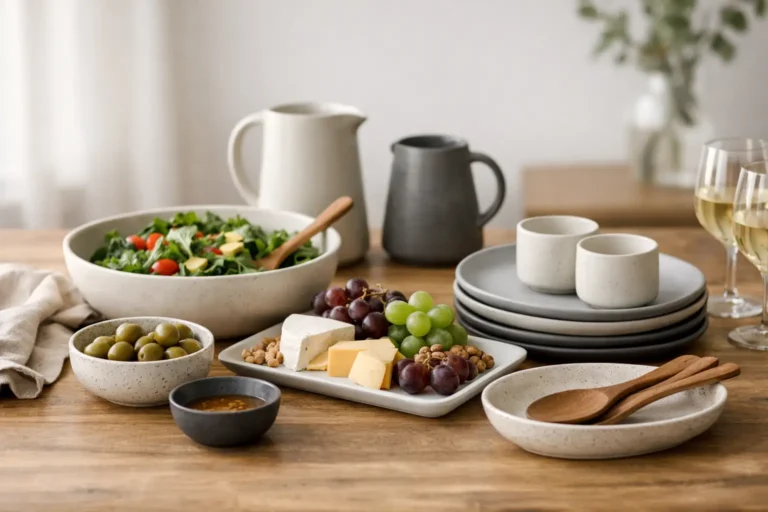
Food looks more generous when it is served with intention. You do not need formal china for every meal, but serving directly from a pan or plastic container can make a finished dish feel unfinished. Transfer pasta to a wide bowl, pile roasted vegetables onto a platter, or bring a simple salad to the table in a substantial serving dish.
Contrast is one of the easiest styling tools. A colorful salad stands out against a neutral ceramic bowl. Golden bread looks inviting on a dark wood board. A crisp white napkin gives even a casual lunch a cleaner, more composed finish. Use what you have, then add one detail that feels considered: a small vase of herbs, a linen runner, or tapered candles for an evening meal.
If you are cooking for guests, choose dishes that allow you to spend time at the table. Braises, baked pastas, large salads, and composed platters are often better hosts than recipes requiring constant attention at the stove. The most luxurious dinner party is not the one with the longest menu. It is the one where everyone, including the host, can relax.
Not every evening calls for a multi-course meal. Convenience has a place in a refined kitchen when it is chosen thoughtfully. Use rotisserie chicken in a fresh salad, pair quality store-bought ravioli with browned butter and herbs, or create a composed meal from good bread, smoked fish, fruit, and cheese.
The key is adding one fresh element. Toss prepared soup with a handful of spinach and a squeeze of lemon. Finish a frozen pizza with arugula and shaved Parmesan. Warm a jarred sauce with garlic, red pepper flakes, and a touch of cream. These small gestures turn shortcuts into meals that feel personal rather than purely practical.
Seasonal cooking brings natural variety to your table without demanding endless creativity. Spring invites tender greens, citrus, and fresh herbs. Summer makes room for tomatoes, berries, grilled vegetables, and chilled drinks. In autumn, lean into squash, apples, warm spices, and roasted dishes. Winter is made for simmered soups, rich pastas, and slow-cooked comfort.
This rhythm also offers a simple way to refresh your kitchen and dining space. Bring in lighter linens and glassware when the weather warms, then transition to deeper tones, textured ceramics, and candlelight when evenings turn cooler. Your food and your home can tell the same seasonal story.
The next time you prepare a meal, choose one detail worth lingering over. Set out the better plates, finish the dish with herbs, or take five extra minutes to sit down properly. A refined life is rarely built from grand gestures. More often, it begins with dinner made thoughtfully and enjoyed without rushing.








Leave a comment