
An area rug can make a beautiful room feel considered – or make a carefully chosen sofa, table, and lighting arrangement look as though each piece arrived on a different day. Learning how to choose indoor area rugs begins with seeing the rug as more than a soft finishing touch. It is the foundation that defines a seating area, softens hard surfaces, introduces color or texture, and gives the room its sense of proportion.
The most luxurious choice is not always the boldest pattern or the highest pile. It is the rug that suits the scale of your room, the way you live, and the atmosphere you want to create. A pale wool rug may bring quiet sophistication to a formal living room, while a washable low-pile design can be the smarter premium choice for a busy entryway or family space.
Size has more influence than almost any other rug decision. A rug that is too small tends to float in the center of the room, making furniture feel disconnected and the space feel less polished. When a rug is generously proportioned, it creates visual continuity and makes even a modest room appear more elevated.
In a living room, aim to place at least the front legs of your sofa and accent chairs on the rug. If the room is large enough, placing all furniture legs on the rug creates an especially tailored, lounge-like look. Leave a border of visible flooring around the perimeter so the rug frames the arrangement rather than crowding it.
For a dining room, the rug should extend beyond the table far enough that chairs remain on it when pulled out. About 24 inches of extra rug on every side is a reliable target. This detail matters: a dining chair that catches on the edge of a rug makes a room feel less comfortable, no matter how beautiful the décor may be.
In bedrooms, an area rug should offer softness where you step out of bed. A large rug positioned under the bed and nightstands is a refined option, while runners on both sides offer a practical alternative for smaller rooms. Measure the room and mark the proposed rug dimensions with painter’s tape before ordering. It is a simple step that prevents an expensive-looking room from feeling undersized.
A beautifully curated home still has to accommodate everyday life. Before deciding on fibers or finishes, consider what happens in the room: shoes at the front door, pets near the sofa, meals around the table, or relaxed mornings in the bedroom. The right rug supports the ritual of the space without demanding more care than you can realistically give it.
Living rooms invite a little more visual drama. This is an ideal setting for an artful pattern, a dimensional weave, or a rich neutral that grounds sculptural furniture and decorative accents. Wool is a classic investment because it feels substantial, resists crushing, and naturally handles everyday soil well. It can shed at first, particularly when new, but the warmth and depth it brings are difficult to replicate.
For a more accessible, family-friendly option, consider a durable synthetic blend or a washable rug with a low profile. These styles are often easier to maintain around children and pets, though they may not have the same natural texture as wool. A rug with subtle variation in tone is especially forgiving while still looking luxurious.
Dining rooms benefit from flatweave, low-pile, or tightly woven rugs. Chairs move more easily across a smooth surface, and crumbs or spills are simpler to address before they become a problem. Avoid very shaggy textures here, even if they look inviting online. Their softness is better reserved for rooms where feet, not furniture legs, do most of the moving.
Pattern can be a smart choice beneath a dining table. It adds personality while helping disguise the occasional mark between cleanings. If your table has a dramatic shape or ornate base, balance it with a quieter rug. If the furniture is streamlined, a rug can bring the decorative character.
A bedroom rug should make the first and last moments of the day more comfortable. Plush wool, cotton blends, and softly textured designs work beautifully in this setting. Since bedrooms usually receive less foot traffic, you can choose a lighter color or more delicate finish with greater confidence.
For a serene, hotel-inspired retreat, choose a rug that is close in value to the flooring but richer in texture. For a more expressive look, let the rug introduce a dusty rose, muted blue, warm terracotta, or botanical motif that complements the bedding without matching it too precisely.
These are hardworking spaces, so prioritize construction over delicate fibers. Low-pile runners, flatweaves, and washable designs are practical choices, especially in households with pets or frequent guests. Look for a pattern or medium-toned color that does not reveal every trace of daily life.
A runner should be centered in the hallway and leave a visible strip of floor along both sides. In an entry, select a rug that allows the door to open freely. This small measurement check protects both your rug and the ease of coming home.
Material changes both the appearance and the experience of a rug. Wool has a naturally premium feel, with softness, resilience, and a beautifully nuanced surface. Cotton is lighter and often more casual, making it well suited to relaxed kitchens, bedrooms, and layered looks. Natural fibers such as jute and sisal bring organic texture, but they can feel rougher underfoot and may be less suitable for damp areas or homes where spills are common.
Synthetic fibers, including polypropylene and polyester, are valued for stain resistance, affordability, and easy maintenance. They are an excellent fit for busy homes and high-traffic rooms. The trade-off is that they can feel less substantial than natural materials, although a well-made synthetic rug with a thoughtful weave can still look remarkably sophisticated.
Pile height is equally relevant. Low-pile rugs are easier to clean and more compatible with doors, dining chairs, and high-traffic spaces. Medium pile offers a comfortable middle ground. High-pile or shag styles feel indulgent in a bedroom or quiet sitting room, but they require more attention and are not always ideal for households with shedding pets.
A rug does not need to match every finish in the room. In fact, exact matching can make a space look flat. Instead, select one or two colors already present in the room and choose a rug that repeats them in a fresh way. A rug with ivory, charcoal, and caramel can connect a cream sofa, dark accent pieces, and warm wood furniture without looking overly coordinated.
If your furniture and drapery are mostly neutral, the rug is a natural place to introduce an expressive print. If the room already includes patterned upholstery, statement artwork, or colorful pillows, a quieter rug gives the eye somewhere to rest. This is where refined design often comes down to restraint.
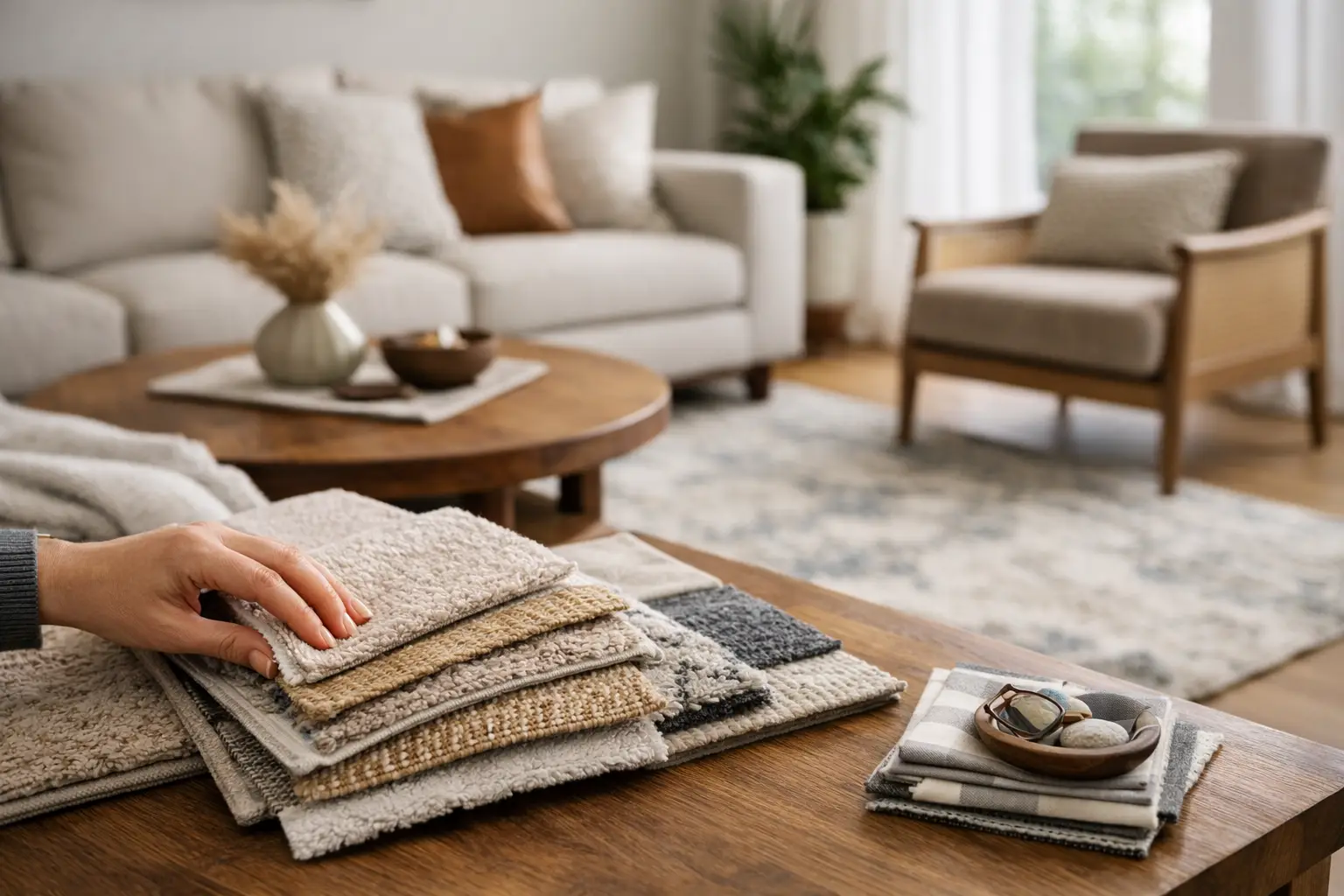
Consider undertones, too. Cool gray flooring can look disconnected beside a strongly yellow-beige rug, while warm oak floors pair naturally with sand, camel, rust, olive, and softened cream. Bring home or order swatches when possible, then view them in morning light and evening lamp light. Color can shift dramatically across the day.
A rug pad is the discreet detail that makes an area rug feel more expensive underfoot. It helps prevent sliding, adds cushion, protects flooring, and can extend the life of the rug by reducing friction. Choose a thin, firm pad for dining areas and doorways, and a denser cushioned pad for bedrooms and living rooms.
Make sure the pad is slightly smaller than the rug so it remains hidden. Also check that its materials are safe for your flooring type, particularly hardwood, vinyl, or laminate. A premium rug deserves a foundation that protects it.
Layering can make a room feel collected rather than overly styled. A larger natural-fiber rug underneath a smaller patterned rug creates depth in a living room or bedroom, especially when you want visual interest without committing to an oversized print. The base rug should be simple and generously sized, while the top layer becomes the focal point.
This approach is also useful when you already own a rug that feels too small but still has a place in your home. Rather than hiding it away, give it a larger foundation and let it become part of a more intentional arrangement.
The best indoor area rug is one that makes your home feel more inviting the moment you walk in. Choose the scale with care, select a material that suits your routines, and let color or texture express your point of view. At Ceremoniale, the most compelling spaces are built through those thoughtful layers – a home that looks elevated, but feels entirely yours.









Leave a comment