
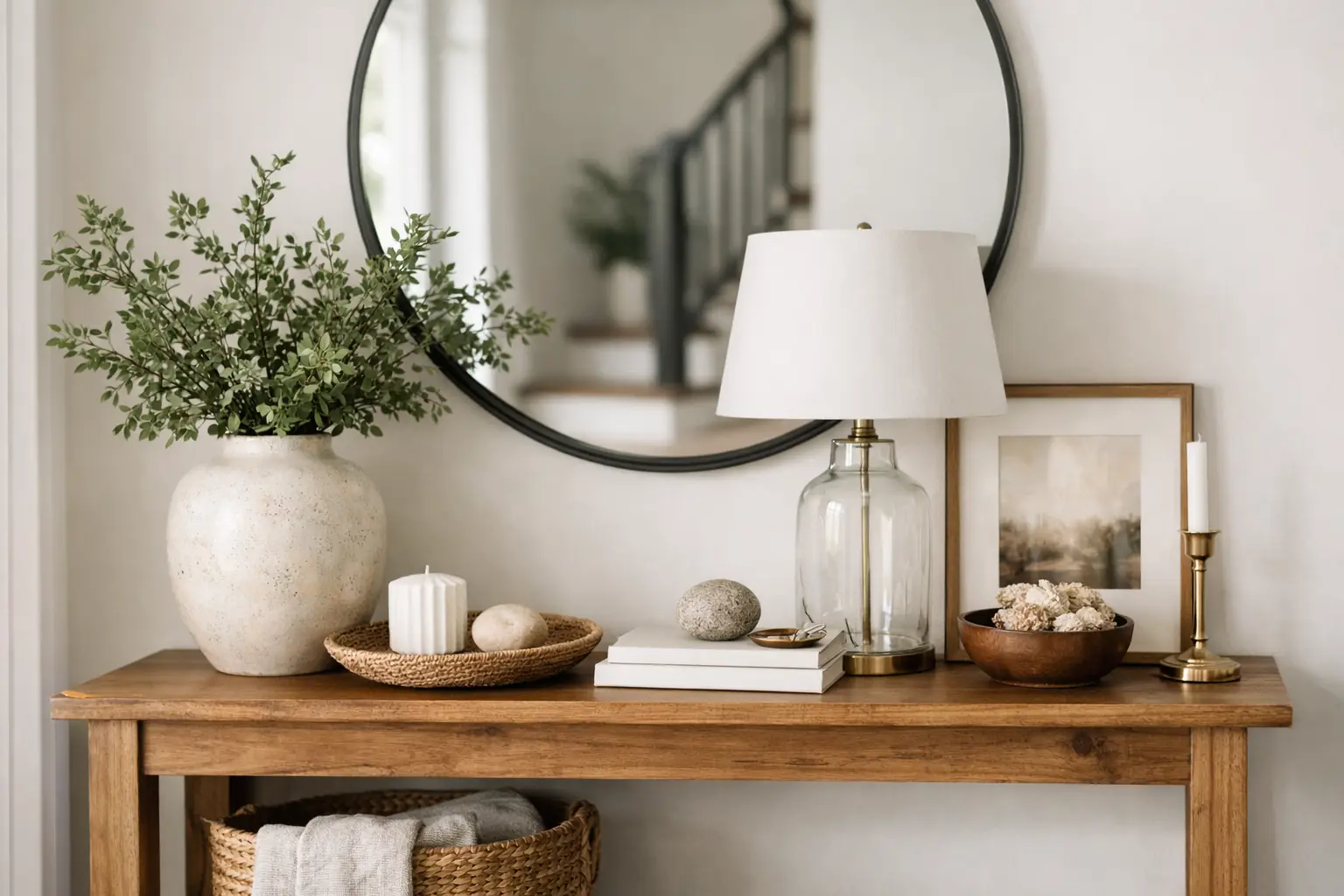
The entryway table does a lot of quiet work. It greets guests, catches keys, sets the mood for the rest of your home, and somehow has to stay attractive while handling daily clutter. If you are wondering how to decorate entryway table styling so it feels polished instead of crowded, the answer is less about filling every inch and more about creating a curated moment that looks effortless.
A beautiful entryway should feel welcoming within seconds. That means your table needs a little structure, a little personality, and enough function to keep real life from taking over. The most luxurious entryways are rarely overdone. They are edited, intentional, and built around a few strong pieces that work together.
Start with proportion. Before you choose a vase, tray, or lamp, look at the scale of your table and the wall behind it. A narrow console calls for a lighter touch, while a longer entry table can carry more visual weight. Decorating without considering size is usually what makes an entryway feel awkward.
Think in layers rather than single objects. A lamp adds height, a mirror or artwork anchors the wall, and a tray creates order at the surface level. Once those core elements are in place, smaller decorative accents feel elevated instead of random. This is where the space starts to look curated rather than simply decorated.
It also helps to decide what role the table needs to play. In some homes, it is purely decorative. In others, it needs to hold keys, sunglasses, mail, or even a basket underneath for shoes. There is no single correct formula. The best styling choices usually come from being honest about how your entryway is actually used.
Every polished entryway table needs a focal point. Most often, that is a mirror, large artwork, or a sculptural lamp. If your table sits against a blank wall, the space above it should not be an afterthought. It is what gives the entire setup presence.
A mirror is the classic choice because it reflects light and makes a smaller foyer feel more open. Round mirrors soften the straight lines of a console table, while rectangular mirrors feel cleaner and more architectural. If your entryway already has enough light and you want a more editorial look, framed art can feel especially refined.
If you prefer a lamp as the main statement, choose one with a base that feels substantial. A delicate lamp on a large console can look under-scaled, while an oversized lamp on a slim table may overwhelm it. This is one of those areas where balance matters more than trend.
Once your anchor is in place, style the tabletop in visual groupings. One of the easiest ways to make an entryway table look expensive is to vary height, shape, and texture. A tall lamp or vase, a medium object like a candle or stacked books, and one lower functional piece such as a tray often create the right rhythm.
This combination works because it feels layered without becoming busy. The eye moves naturally from one element to the next. You do not need many pieces, but the pieces you choose should contrast each other slightly. A glossy ceramic vase beside a woven tray or a polished metal bowl next to a matte book stack adds depth in a subtle way.
Florals or greenery are especially effective here. A fresh arrangement instantly makes the entryway feel cared for, but high-quality faux stems can deliver the same sense of softness with less upkeep. If your table already has bold decor, keep the arrangement restrained. If the rest of the styling is minimal, a fuller arrangement can act as the statement.
The most beautiful entryway table will lose its appeal quickly if it cannot handle real life. That is why function should be built into the styling from the start. A tray is one of the smartest additions because it gives daily essentials a designated home and keeps them from spreading across the entire surface.
Use a decorative box for smaller items you would rather not display, such as spare keys or dog-walking accessories. A shallow bowl works well for grab-and-go pieces, but it looks best when it is not overloaded. If mail tends to pile up, include a slim organizer or commit to clearing it daily. Styling can help, but it cannot compete with unmanaged clutter.
If your table has a lower shelf, treat it as part of the design. A pair of baskets can add storage while keeping the entryway neat. Large books, neatly arranged boxes, or a folded throw can also work, depending on the look you want. Just avoid filling every level too tightly. Negative space is part of what makes an entryway feel premium.
Your home’s overall aesthetic should guide the details. A modern entryway table often looks best with fewer objects, cleaner shapes, and a tighter color palette. Think a sleek lamp, a black-framed mirror, and one sculptural accent. The appeal comes from restraint.
If your style leans classic, go for symmetry and timeless finishes. Matching lamps, framed art, and elegant trays create a more formal impression. This approach works beautifully in traditional homes, though it can feel too rigid in a very small space.
For a softer, more collected look, mix organic textures with elevated finishes. A wood console, ceramic vase, linen shade, and brushed metal dish create warmth while still feeling refined. This is often the sweet spot for shoppers who want a home that looks luxurious but still livable.
Seasonal styling can also work well, as long as it stays selective. In fall, branches in warm tones or a rich candle can shift the mood. During the holidays, a garland or decorative trees may feel festive. The key is to preserve the entryway’s base elegance rather than replacing it with themed decor.
A well-decorated entryway table usually follows a controlled palette. That does not mean everything has to match exactly, but the colors should feel related. If your foyer is calm and neutral, layering ivory, taupe, black, and soft metallics can create a look that feels expensive with very little effort.
If the surrounding space has more personality, you can bring in deeper tones through books, florals, or decorative objects. Emerald, navy, plum, or warm rust can all feel sophisticated when used with intention. What tends to go wrong is mixing too many accent colors in too small a space.
Metal finishes matter too. Gold tones can make the entryway feel warm and glamorous, while silver or chrome reads cleaner and cooler. Matte black adds contrast and a more contemporary edge. Choose one dominant finish and let the others play a supporting role if needed.
The most common mistake is using too many small items. A cluster of tiny decor pieces often reads as visual noise, especially in an entryway where people move through quickly. Fewer, larger-scale objects almost always look more elevated.
Another issue is ignoring height. When everything sits at the same level, the table feels flat and unfinished. Even one tall element can transform the composition. On the other hand, if every item is tall, the setup can look crowded and blocky. Contrast is what creates interest.
Poor lighting can also diminish the effect of great styling. If your entryway is dim, a lamp is not just decorative. It adds glow and makes the whole space feel more inviting. In a brighter foyer, reflective surfaces like mirrors and glass can help amplify natural light.
Finally, avoid decorating the table in isolation. The rug, wall color, nearby lighting, and even the front door all contribute to the impression. The entryway feels most luxurious when each element looks considered as part of a larger story.
If you want a reliable approach, use this formula: one anchor on the wall, one tall piece on the table, one practical catchall, and one personal detail. That personal detail could be a candle, a small stack of fashion or design books, a framed photo, or a sculptural object that reflects your taste.
This formula is flexible enough to work in almost any home. It can be adjusted for table size, style preference, and storage needs without losing that polished feel. Brands like Ceremoniale understand this balance well – elevated decor should look exclusive, but it should still support daily living.
A beautifully styled entryway table is not about perfection. It is about setting a tone the moment you walk through the door. When the pieces feel balanced, useful, and thoughtfully chosen, your home instantly feels more composed, more welcoming, and far more memorable.







Leave a comment