
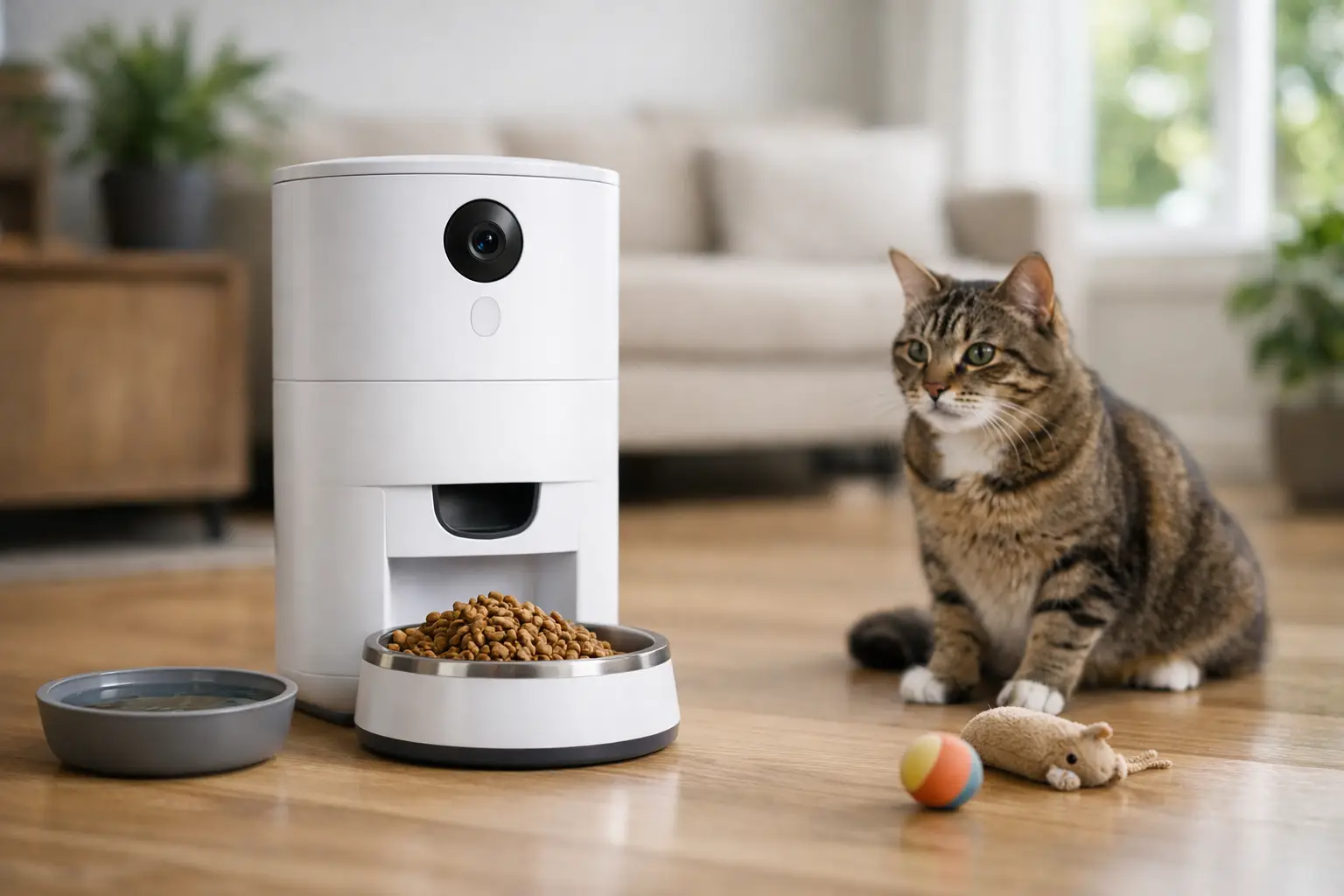
The breakfast rush has a way of arriving before anyone is fully awake. Between coffee, school drop-offs, and a pet circling the kitchen with remarkable determination, a reliable feeding routine can feel like a small luxury. This review of automatic pet feeder essentials looks beyond the novelty of scheduled meals to help you choose a piece that supports your pet’s well-being while preserving the calm, polished rhythm of your home.
An automatic feeder is not simply a convenience gadget. For the right household, it is a thoughtfully designed upgrade: a way to serve measured portions on time, reduce the chaos around early mornings, and make daily pet care feel more considered. The best choice depends on your pet, your schedule, and the level of refinement you expect from the objects that earn a place in your kitchen or pantry.
At its best, an automatic pet feeder dispenses dry food at pre-set times and in controlled amounts. That makes it particularly appealing for adult cats and dogs whose diets benefit from consistency. A pet that expects breakfast at 6 a.m. may still be eager, but the feeder becomes the dependable source of that meal rather than the person trying to sleep another hour.
Portion control is the category’s most meaningful benefit. Free-feeding can make it difficult to see how much a pet is actually consuming, especially in multi-pet homes. A programmable feeder creates a clearer routine, helping owners follow veterinarian-recommended serving sizes and notice changes in appetite sooner.
It also brings a welcome sense of order to busy days. A feeder can cover a delayed commute, an evening event, or a quiet weekend morning without turning mealtime into a source of worry. That is not a replacement for attentive care, but it is a practical layer of support for real life.
Beautiful styling may make a feeder easier to welcome into a design-conscious home, but function should lead the decision. The most appealing automatic feeders combine a clean silhouette with dependable mechanics, straightforward controls, and materials that are easy to keep fresh.
Large-capacity models can be useful for homes with bigger dogs or for owners who prefer fewer refills. Still, bigger is not always better. Dry food stays at its best when it is stored thoughtfully, so a huge hopper may be unnecessary for one small cat. Choose a capacity that comfortably covers several days of meals without leaving kibble sitting for extended periods.
For smaller pets, a compact feeder can look more elegant and feel less intrusive in a breakfast nook or mudroom. For larger pets, look closely at bowl size and dispensing design. A unit with a generous food bin but a shallow dish can still create an awkward mealtime experience.
Not all portion controls are equally precise. Some feeders dispense tiny increments, while others use larger, less flexible serving units. This distinction matters when a pet has a weight-management plan or requires several smaller meals throughout the day.
Before choosing, consider your pet’s usual serving size and compare it with the feeder’s stated portion increments. It is wise to test the actual amount dispensed with your preferred kibble before relying on the schedule. Kibble shape and size can affect how accurately food moves through the mechanism.
Resourceful pets can be surprisingly inventive around food. A loose lid or easy-to-tip base may be perfectly fine for a gentle senior cat and completely unsuitable for a food-motivated young dog. Look for a secure top, a stable footprint, and a dispensing area designed to discourage curious paws.
This is one of the clearest examples of where a premium-looking feeder must also be practical. Smooth finishes, a streamlined body, and a discreet profile are lovely, but they should not come at the expense of sturdiness. A feeder should look curated in your space and remain dependable when your pet takes an interest in it.
Many automatic feeders use wall power, batteries, or both. A dual-power option is especially worthwhile because it can continue scheduled meals during a brief power outage. For households that travel occasionally or face unpredictable weather, that extra reassurance can make a meaningful difference.
Battery-only feeders can be wonderfully flexible for placement, while plugged-in models may offer more advanced screens or connected features. Whichever style you select, check batteries regularly and keep the cord positioned safely away from chewing or high-traffic areas.
Wi-Fi-enabled feeders allow you to adjust schedules from a phone, receive notifications, and sometimes check feeding history. For a household with changing schedules, this can be exceptionally convenient. It can also be helpful when a pet sitter is visiting, since you can confirm whether a meal has been dispensed as planned.
Yet smart features are not automatically essential. App-connected devices usually cost more, require a dependable home network, and may create more setup steps than a simple digital timer. If your pet’s routine rarely changes, a well-made programmable feeder with clear onboard buttons may be the more graceful, uncomplicated choice.
Some models include a voice-recording function that plays a familiar call at mealtime. Pets vary in their response. A cat may appreciate the familiar cue, while another may ignore it entirely. Treat this as a pleasant extra rather than a deciding feature.
A feeder’s convenience fades quickly if it is difficult to clean. Choose models with a removable bowl and food-contact pieces that can be washed regularly. Stainless steel bowls are often an excellent option because they are durable, polished, and easy to maintain. BPA-free plastic can also work well when it is smooth, sturdy, and free of difficult crevices.
The hopper itself needs attention, too. Wipe it out between refills and follow the manufacturer’s care instructions, particularly if food dust builds up around the chute. A feeder should support a refined routine, not hide a cleaning task until it becomes unpleasant.
For homes using wet food, standard automatic dry-food feeders are not the answer. Timed tray feeders with ice packs may work for short periods, but wet food has stricter freshness requirements. If your pet eats prescription food, has diabetes, or follows a carefully managed medical diet, speak with your veterinarian before making an automated system part of the routine.
An automatic feeder should never be used to make extended absences feel acceptable. Pets need fresh water, companionship, bathroom care, observation, and prompt help if something seems wrong. A feeder is ideal for scheduled meals around an active day, not for leaving an animal unattended for long stretches.
It can also be a poor fit for pets who share food uneasily. In a multi-pet household, one determined eater may finish another pet’s portion before anyone notices. Microchip-activated feeders can help in those cases, though they are typically more specialized and may take time for pets to accept.
Young puppies, pets with chewing habits, and animals prone to anxiety may need closer supervision around any new device. Introduce the feeder gradually by placing it near the regular bowl, offering a few meals without the timer, and allowing your pet to become comfortable with the sound of food dispensing.
The ideal automatic feeder should feel like a quiet part of a well-run home: useful, dependable, and visually at ease with its surroundings. Consider where it will live before you buy. A compact, neutral-toned design may suit an open kitchen, while a larger model may be better placed in a pantry, laundry room, or dedicated pet station.
At Ceremoniale, thoughtful pet care belongs naturally alongside the details that make a home feel more polished. A feeder can be one of those small, high-impact additions, especially when paired with a washable mat, a handsome storage container for kibble, and a clean water station nearby.
Choose the model that makes your routine easier without asking you to compromise on care. Once your pet learns that meals arrive reliably and your mornings become a little less hurried, the right feeder earns its place not as another gadget, but as a considerate everyday essential.








Leave a comment