
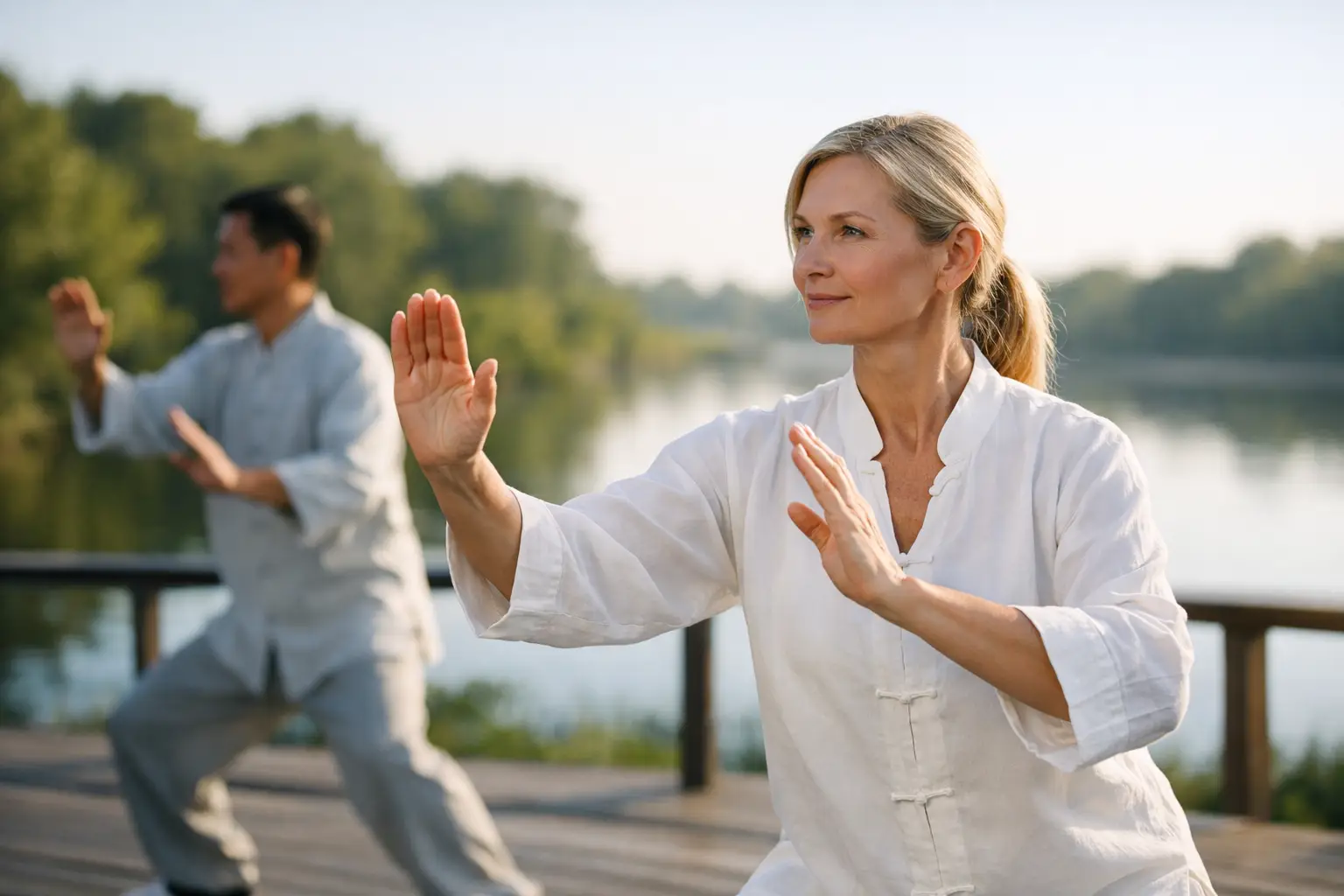
A beautiful wellness routine does not need a crowded studio, complicated equipment, or an hour carved from an already full schedule. Tai chi workouts offer something more refined: slow, intentional movement that can make an ordinary corner of your home feel like a private retreat. With a few minutes, comfortable clothing, and enough room to extend your arms, you can create a practice that supports balance, mobility, and a quieter state of mind.
Often described as moving meditation, tai chi pairs gentle, flowing motions with mindful breathing and focused attention. The pace is unhurried, but that does not make it inconsequential. A consistent practice asks you to notice posture, shift your weight with control, and move through space with greater ease. For anyone building a more polished approach to personal well-being, that is a luxury worth making time for.
Tai chi began as a Chinese martial art, with forms made up of connected movements and deliberate transitions. Today, many people practice it for low-impact exercise, relaxation, coordination, and everyday mobility. Unlike a workout built around intensity or competition, tai chi rewards patience. There is no need to chase a personal record. The goal is to become more present in your own body.
That makes it especially appealing for people who want movement without the hard edges of a high-impact routine. The motions are generally gentle on the joints and can be adapted for many fitness levels. Still, gentle does not mean effortless. Holding a soft bend in the knees, maintaining an upright spine, and shifting weight from one leg to the other can build meaningful body awareness over time.
The value is also practical. Tai chi can be done at home before the household wakes, during a midday reset, or as a calm close to the evening. It asks for very little, which makes consistency more realistic than a program that depends on a commute, special machines, or perfect timing.
For people managing injuries, chronic conditions, dizziness, or balance concerns, a physician or qualified movement professional should be part of the decision. A chair-supported or seated approach may be a better place to begin. The most elegant routine is one that respects your body rather than forcing it to perform.
The setting influences the experience. You do not need a dedicated home gym, but a thoughtfully arranged space makes a short practice feel more intentional. Choose a flat, uncluttered area where you can take a few steps in each direction without navigating furniture, pet toys, or loose rugs.
Natural light is lovely, but not essential. A quiet bedroom, covered patio, living room, or open section of a home office can work beautifully. If you practice early or late, soft lighting can help signal that this is time set apart from errands, notifications, and unfinished tasks.
Wear clothing that allows you to move without distraction. A relaxed matching set, breathable top, and soft stretch pants create an elevated look while allowing your knees and hips to bend freely. Bare feet work well on a clean, non-slip floor; supportive flat shoes may feel more secure if you need extra stability. Avoid slippery socks and oversized hems that can catch underfoot.
At Ceremoniale, a refined lifestyle is built from the small details that make daily rituals feel considered. A supportive floor mat nearby, a beautiful water bottle, a light throw for your post-practice pause, or simple decor that keeps the room serene can turn an overlooked area into a place you genuinely want to use.
Begin with a short session rather than trying to learn a long traditional form all at once. Ten minutes is enough to establish a rhythm. The quality of your attention matters more than the length of the session, particularly in the first few weeks.
Stand with your feet about hip-width apart and let your knees soften. Imagine the crown of your head lifting gently while your shoulders release down and away from your ears. Keep the chest open without over-arching the lower back. Your weight should feel even through both feet.
Take several relaxed breaths. You do not need to exaggerate the inhale or force the exhale. Simply let your breath become slower and quieter as your attention settles. If standing is uncomfortable, sit toward the front of a sturdy chair with both feet planted on the floor.
A beginner-friendly sequence can be as simple as raising and lowering the arms with your breath. Inhale as your hands float from your sides to chest height, palms facing down. Exhale as they lower again. Keep the elbows soft and allow the movement to remain smooth rather than stiff.
Next, add a gentle weight shift. With your feet still planted, slowly transfer more weight into the right foot, then return to center. Repeat to the left. Keep the movement controlled, and do not lean so far that you feel unsteady. This simple exercise teaches one of tai chi’s central ideas: stability comes from moving with awareness, not from locking the body in place.
You can then try a basic forward-and-back pattern. Step one foot a comfortable distance forward, bend the front knee slightly, and keep the back heel down if it feels natural. As you shift forward, let your hands press softly ahead of you as if moving through water. Shift back, drawing the hands toward your torso. Repeat slowly on both sides.
If a motion causes sharp pain, stop. If your shoulders tense, make the arm range smaller. Tai chi should feel calm and controlled, not strained or precarious.
The visual grace of tai chi comes from details that are easy to miss. The hands do not need to be perfectly positioned, and the movements do not need to look dramatic. Instead, notice whether your jaw is clenched, whether your shoulders are creeping upward, or whether you are holding your breath while concentrating.
A useful cue is to move as though you are carrying something delicate. That image encourages softness in the hands and steadiness through the center of the body. It also keeps the pace measured. Rushing through a sequence can turn tai chi into ordinary calisthenics, while moving too slowly before you have enough control can make balance harder. Find a pace where you can breathe comfortably and remain stable.
Posture deserves the same attention you might give to a well-tailored outfit. When the spine feels long, the shoulders relaxed, and the weight grounded through the feet, the whole movement looks and feels more composed. That awareness can carry into the rest of the day, whether you are working at a desk, preparing dinner, or walking through your neighborhood.
The best tai chi workouts are the ones you will repeat. Instead of saving the practice for a rare open hour, connect it to a familiar moment in your day. Try five minutes after your morning coffee, ten minutes before a shower, or a few slow movements after changing out of work clothes.
A weekly rhythm can be modest: three short sessions at first, then four or five as the habit becomes natural. Some days, you may want a full beginner class or a longer guided practice. On others, two minutes of breathing and weight shifting may be exactly right. Both count.
Learning from a qualified instructor, either in person or through a well-produced class, can help you understand alignment and build a sequence with confidence. Videos are convenient, but they cannot see whether your knees are tracking comfortably or whether you are losing balance. If you enjoy the ritual, occasional instruction is a worthwhile investment in moving well.
Tai chi will not replace every form of exercise. If your goals include substantial cardiovascular conditioning, heavy strength training, or sport-specific performance, you may want to pair it with walking, resistance work, or another activity you enjoy. Its strength lies elsewhere: it brings composure, body awareness, and gentle movement into the rhythm of real life.
Start with one quiet corner, one comfortable outfit, and one unhurried sequence. Over time, tai chi can become less like another obligation on the calendar and more like a refined daily ritual – a few intentional minutes that leave you standing taller, breathing easier, and ready to move through the rest of your day with greater poise.









Leave a comment