
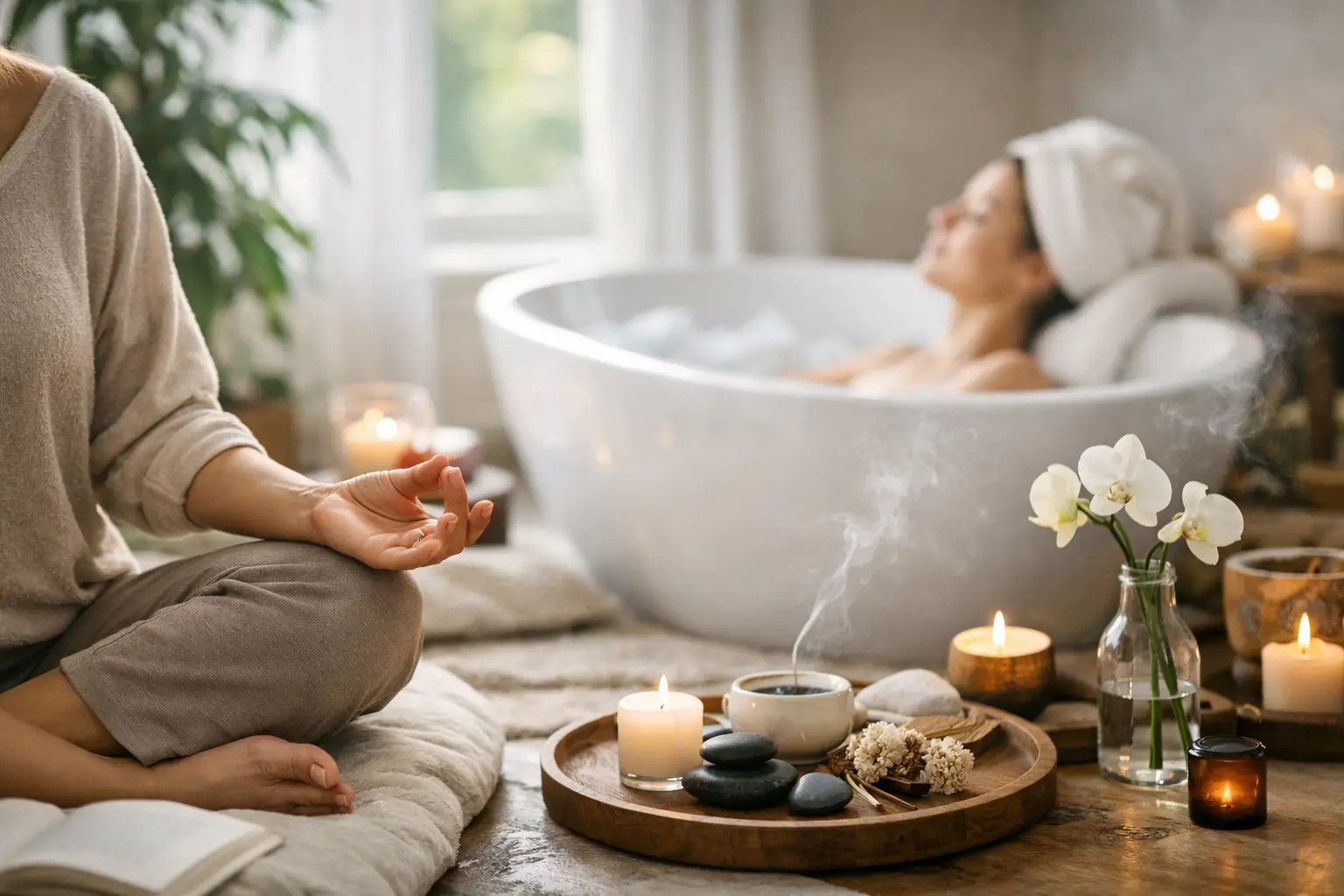
A hectic day has a way of following you home. It shows up in the unopened mail on the counter, the crowded chair in the bedroom, and the feeling that even your evening has become another item on the list. To relieve stress, start by treating your surroundings and routines as part of your well-being. A more polished, comforting home does not solve every pressure, but it can give your mind a softer place to land.
The most effective rituals are not always dramatic. Often, they are small, beautiful decisions repeated with intention: a clear bedside table, a warm shower, a favorite robe, a room that feels considered rather than chaotic. Here are ten ways to create that sense of calm with an elevated touch.
The first few minutes after work can set the tone for the rest of the night. Instead of carrying your phone, laptop, and to-do list straight into your living space, create a small arrival ritual. Put away your bag, change into comfortable clothing, and take five quiet minutes before starting dinner, scrolling, or responding to messages.
A designated landing spot helps. A refined tray near the entryway, a tasteful catchall on a console, or a neatly arranged hook for keys can keep everyday clutter from becoming visual noise. The goal is not perfection. It is to signal that the demands of the day do not need to occupy every corner of your home.
Harsh overhead lighting can make even a lovely room feel more demanding. In the evening, choose softer layers of light: a table lamp beside the sofa, a warm bedside lamp, or a subtle accent light in a reading corner. This simple shift creates a more intimate atmosphere and helps distinguish the end of the day from the hours spent working, commuting, or managing a household.
Consider where you naturally pause. The bedroom, bathroom, and living room deserve particular attention because they are often where you decompress. A thoughtfully placed lamp can make an ordinary corner feel like a private retreat.
When everything feels urgent, a single clear surface can be surprisingly restorative. Choose a coffee table, nightstand, kitchen island, or vanity and remove anything that does not belong there. Then add back only what feels useful or beautiful: a candle, a small vase, a favorite book, or a sculptural decorative object.
This is not a demand to declutter your entire home in one weekend. Large organizing projects can create more pressure when your energy is already low. One finished surface offers a visible win and a moment of visual quiet.
There is a difference between changing into whatever is closest and choosing clothing that makes you feel at ease. Soft lounge sets, a flowing wrap, plush slippers, or a lightweight robe can turn an ordinary evening into a more intentional experience.
The right fabrics and silhouettes matter because physical comfort affects how easily you can settle. Choose pieces that do not pinch, tug, or require constant adjustment. At the same time, color, texture, and a flattering fit can preserve the feeling of being put together. Relaxation does not have to mean abandoning your personal style.
A shower is one of the few daily rituals that naturally asks you to pause. Make it feel more restorative by preparing the space before you step in. Lay out a fresh towel, choose a body wash with a scent you enjoy, and keep the counter clear enough that the room feels calm rather than crowded.
You do not need an elaborate spa bathroom to create a luxurious effect. A coordinated towel set, an elegant storage basket, and a beautiful mirror can make the routine feel more considered. Keep the experience simple enough that you will actually use it on a busy Tuesday night.
Your bedroom should not have to be showroom-perfect, but it should support rest. Begin with the bed. Fresh sheets, supportive pillows, and a blanket with inviting texture create an immediate sense of comfort. Keep the colors and patterns aligned with what makes you feel peaceful, whether that is crisp neutrals, soft florals, or deeper jewel tones.
Try to reserve the bed for sleep, reading, and quiet conversation whenever possible. If you regularly answer emails or sort laundry there, the space can begin to feel like another work zone. A small basket for extra throws and a discreet bedside organizer can help preserve the room’s calmer purpose.
Stress often creates the urge to multitask, even during moments meant for rest. Counter that impulse with an uncomplicated activity that occupies your hands without demanding much mental effort. Arrange flowers, fold fresh linens, brush your pet, polish a favorite piece of jewelry, or prepare a simple cup of tea in a beautiful mug.
These gestures may seem minor, but they create a gentle rhythm. They also replace passive scrolling with an experience that leaves your space, or your mood, a little better than before. The key is to choose a task with a natural stopping point. You are looking for relief, not another project.
A phone can be useful, social, and entertaining, but it can also keep the mind in a state of alert. News alerts, group chats, shopping reminders, and work messages all compete for attention long after the day should be winding down.
Choose one inviting corner where your phone does not come with you. It might be an armchair with a throw and reading light, a spot on the patio, or a bench by the window. Add a book, journal, or crossword nearby so the space has an easy alternative ready. Even fifteen phone-free minutes can make an evening feel less fragmented.
The senses are powerful guides back to the present moment. Pay attention to the details that make your home feel comforting: the softness of a pillow, the scent of clean linens, the steam from a warm drink, or the sound of rain from an open window. These are not frivolous extras. They are part of how a home becomes a refuge.
Choose scents carefully, especially if you share your home with children, pets, or anyone sensitive to fragrance. A subtle option is often more relaxing than an overly strong one. The same principle applies to decor. A few curated pieces with personal meaning can feel more serene than a room filled with visual competition.
Decision fatigue is real, especially after a full day. Reduce it by keeping a short rotation of easy dinners, warm drinks, and low-effort snacks you genuinely enjoy. A polished tea set, elegant glassware, or a well-organized serving tray can make even a simple meal feel special.
The point is not to create restaurant-level presentation every night. It is to avoid treating nourishment as an afterthought. Sitting down for ten unhurried minutes, even with a simple bowl of soup or a piece of fruit, can be more grounding than eating while standing at the counter.
A beautiful environment can support emotional ease, but it is not a substitute for care when stress becomes persistent, overwhelming, or disruptive to sleep, work, relationships, or daily life. If you are feeling constantly anxious, exhausted, or unable to cope, speaking with a qualified health professional can be an important next step.
There is no failure in needing more support. Think of your home rituals as part of a wider approach: a way to protect small pockets of comfort, clarity, and self-respect while you address what is causing the strain.
A refined life is not one without pressure. It is one with thoughtful places to set that pressure down. Whether you begin with a softer lamp, a clear nightstand, or a more inviting evening routine, let your home offer the kind of everyday elegance that makes breathing room feel possible.








Leave a comment