
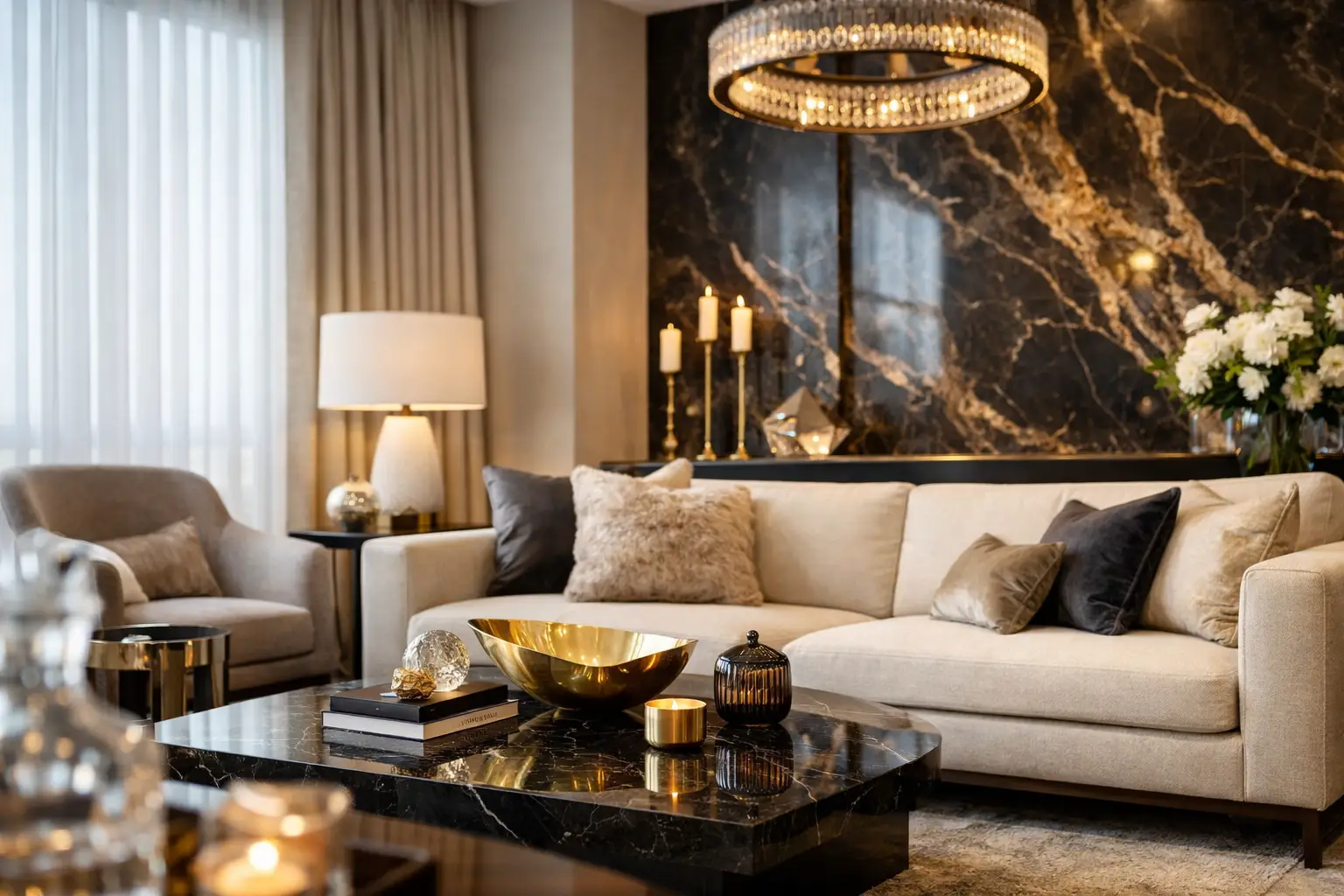
A living room rarely feels luxurious because of one expensive piece. It feels luxurious when the room looks considered – when the lighting is flattering, the textures feel rich, and every object seems chosen rather than simply placed. That is the appeal of luxury inspired living room decor: it brings a polished, high-end mood into everyday spaces without requiring a designer budget or a full renovation.
The most inviting rooms do not try to impress with excess. They create ease. A plush throw draped with intention, a sculptural lamp on a clean side table, a mirror that catches late-afternoon light – these details shift the room from functional to refined. When done well, luxury-inspired styling feels exclusive, but still livable.
Luxury is often confused with formality, but the most beautiful living rooms balance sophistication with comfort. A room can feel premium without feeling stiff. Think soft neutrals with depth, upholstery that invites you to sit down, metallic accents used sparingly, and decor that adds shape and personality rather than clutter.
In practical terms, that usually means editing before adding. If your shelves are crowded, your coffee table is overloaded, or your furniture is fighting for attention, even premium pieces can lose impact. A curated room gives each item space to speak. That is what makes it feel elevated.
Scale matters too. Oversized art can make a standard wall feel more custom. A generously sized rug can instantly improve the proportions of the room. Small decor in a large room often reads as unfinished, while a few substantial elements create the confidence associated with designer spaces.
The fastest way to improve a living room is to get the base right. Walls, floors, large furniture, and foundational textiles set the tone long before decorative accents arrive. If you want a luxurious effect, begin with a palette that feels calm and layered rather than loud and busy.
Cream, taupe, warm gray, espresso, black, olive, and muted stone tones tend to work beautifully because they create depth without visual noise. That does not mean the room has to be beige. It means the color story should feel intentional. A rich jewel tone can look exceptional in a luxury inspired living room decor scheme, but it usually works best when anchored by quieter surroundings.
Textiles do a great deal of the heavy lifting here. Velvet, boucle, linen blends, faux fur, and soft woven fabrics add richness even when the furniture itself is simple. A tailored sofa with elevated pillows often looks more premium than an overdesigned sofa in a flashy fabric. If your current furniture is staying, upgrading pillow covers, throws, and curtains can dramatically change the impression of the room.
One of the clearest differences between a room that looks upscale and a room that looks overdone is restraint. Luxury-inspired rooms usually have a focal point, sometimes two, but not six. It might be a marble-look coffee table, a dramatic chandelier, an elegant accent chair, or a large mirror with a sculptural frame.
The goal is not to fill every corner with something eye-catching. It is to let a few exclusive-looking pieces define the mood. If your sofa is the star, your side tables can be quieter. If your lighting is dramatic, keep surrounding accessories cleaner. This balance makes the room feel curated rather than crowded.
There is also a useful trade-off to keep in mind. Highly decorative furniture can create instant glamour, but it may feel trend-driven after a few seasons. Cleaner silhouettes with premium finishes tend to last longer visually. If you like to update your home often, invest in timeless anchors and let smaller decor pieces carry the trend.
If a living room feels flat, lighting is usually the reason. Overhead lighting alone rarely creates a luxurious atmosphere. The rooms people remember tend to layer light at different heights, creating warmth, softness, and dimension.
Start with one standout fixture if the room allows for it. A chandelier, pendant, or sculptural ceiling light can make the entire space feel more expensive. Then add table lamps or floor lamps to soften the mood in the evening. Glass, ceramic, brushed metal, and textured fabric shades all bring a refined finish.
Warm light is usually the better choice for a luxury-inspired setting. Cool lighting can make beautiful textures feel sterile. It also helps to place lamps where they illuminate materials you want to highlight, such as drapery, artwork, metallic decor, or a glossy tabletop.
Candles and candleholders deserve attention too. They do more than add glow. They introduce ritual, and ritual is part of what makes a room feel elevated. Even when unlit, a chic candle arrangement on a tray can make a coffee table feel styled instead of incidental.
Flat rooms rarely read as luxurious, even when the furniture is expensive. Texture is what gives a room visual richness. It is also what makes neutral spaces feel complete rather than plain.
Mixing textures works better than matching them. A smooth glass vase beside a ribbed ceramic object, a velvet pillow against a linen sofa, or a polished metal accent on a wood side table creates contrast that feels sophisticated. You do not need dramatic color changes when the materials are doing the work.
This is also where rugs become essential. A rug grounds the room, softens acoustics, and adds comfort underfoot. In a luxury inspired living room decor plan, a rug should feel generous enough for the seating area rather than floating awkwardly beneath only the coffee table. The right size immediately makes the room feel more finished.
Window treatments matter just as much. Curtains that are too short or too sparse can diminish the room. Full-length panels in a fabric with some weight create softness and elegance, even if the windows themselves are standard. Hanging them higher and wider than the frame often gives the room a more custom appearance.
Accessories are where personality enters, but they should feel selected, not accumulated. The most polished rooms tend to use decor in small, intentional groupings. A stack of beautiful books, a tray, a candle, and one sculptural object can do more than a table packed with unrelated items.
Decor with shape usually has more impact than decor with slogans or busy pattern. Think carved bowls, fluted vases, framed abstract art, crystal-inspired accents, metallic details, and trays with a clean silhouette. These pieces bring a sense of craftsmanship and quiet luxury.
Mirrors deserve a special mention because they pull double duty. They add shine, reflect light, and make smaller rooms feel more expansive. A well-placed mirror can elevate the room more effectively than another piece of wall art, especially if your space needs brightness.
For shelves and consoles, vary height and material but keep the palette controlled. That consistency is what makes styling feel elevated. If everything is a different finish, the room can start to feel more busy than luxurious.
A beautiful room still needs to feel like yours. Luxury-inspired design is strongest when it reflects personal taste rather than copying a showroom exactly. Maybe that means a fashion-forward black-and-cream palette, maybe it means warmer neutrals with gold accents, or maybe it means modern lines softened by romantic textures.
Personal pieces should still fit the editing principle. A meaningful object, a framed photo in an elegant frame, or a collectible accent can add warmth. The key is presentation. When personal items are displayed with intention, they feel part of the design story rather than visual interruption.
This is also why trend-chasing can backfire. A room built entirely around one viral look may feel dated quickly. A better approach is to choose a timeless foundation and refresh with accessories, seasonal textiles, and distinctive finds from curated collections. That gives you flexibility without losing the premium look.
If you are shopping for updates, look for pieces that feel both beautiful and useful. Decorative trays, elevated lamps, plush throws, accent furniture, mirrors, and statement vases often offer the biggest style return because they blend form with function. At Ceremoniale, that balance between aspirational design and everyday livability is exactly what makes a room feel upgraded rather than untouchable.
A luxurious living room does not ask for perfection. It asks for intention – a few refined choices, a more curated eye, and the confidence to leave space where space is needed. When the room feels calm, layered, and beautifully considered, luxury stops being a price point and starts becoming the way you live.







Leave a comment